Physical Address
304 North Cardinal St.
Dorchester Center, MA 02124
Physical Address
304 North Cardinal St.
Dorchester Center, MA 02124

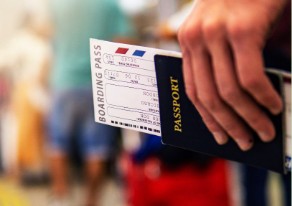
People who move to another country plan the move carefully. The visa timeline, the shipping quote, the lease, the school places, the month of overlapping rent. There is usually a spreadsheet, and by the time the flight comes around most of it has been thought through twice.
Then they land, buy a local SIM because roaming is expensive, and discover over the following fortnight that a surprising number of things they own are no longer reachable.
The old number does not stop working the day you leave. It stops working quietly, weeks later, when the contract lapses or the prepaid balance runs out and the carrier releases the line. Nothing announces this. The first sign is usually a login screen asking for a code that is being delivered to a handset on the other side of the world, or to a number that no longer exists.
What makes it awkward is the timing. It surfaces during the same fortnight you are trying to open a bank account, prove an address and get paid — the period when you least want to be locked out of anything. Some people keep the old line alive on the cheapest prepaid plan they can find and carry a second phone. Others move the important accounts onto a number they can reach from anywhere, using a service such as sms-act.net rather than depending on a SIM that has to stay topped up in a country they have left.
Most people think of a phone number as contact information. Platforms treat it as a credential, and often as the strongest one they hold. It outranks the email address in account recovery, because a number is harder to obtain in bulk than a mailbox. That is the entire reason it is used.
The consequence is that losing the number can be worse than losing the password. A forgotten password is a five-minute reset. A lost recovery number, on an account with money attached, becomes an identity-verification process handled by a support queue.
Banking is the obvious one, and the most painful, because the old bank often needs to stay open until the new one exists. Payment and transfer apps behave the same way, and they are usually how people move their own money during a relocation.
Then there are the accounts nobody thinks about until they are needed. The marketplace where the furniture is being sold. The airline profile holding the return flight. The government portal in the country being left, which may be the only way to file a final tax return or request a document a new employer wants. The cloud storage with the scanned copies of everything the move requires.
None of these are urgent on any particular day. They become urgent together, in the same two weeks, which is what makes the whole thing feel worse than it should.
Sort the number out before the move, not after. Once the old line is gone the same task turns into a recovery process, and recovery processes are slow precisely when you are busiest.
Start by listing every account where a code has ever been sent to your phone. Most people find between fifteen and forty, and the list is more interesting than expected — there is almost always something on it that would be genuinely difficult to replace.
Change the registered number on the ones that hold money, identity or documents first. Leave the low-stakes accounts for later; some of them are not worth the effort at all.
Keep the old line alive through the transition rather than cancelling it on departure day. A month of overlap costs very little and removes the deadline pressure from the entire exercise.
Being able to receive a code solves one narrow problem and leaves the rest untouched.
It does not establish who you are. Residency permits, proof of address, a local tax number, opening a bank account under anti-money-laundering rules, having qualifications recognised — none of that becomes easier because a message arrived. Those systems are deliberately slow and document-heavy, and treating them as obstacles to route around is a good way to create a much larger problem than the one being solved.
It also does not give anyone standing they do not have. If a service is restricted to residents of a country, holding a number from that country while living elsewhere is a terms violation, and the enforcement usually takes the account with it.
Relocation checklists cover the things that cost money and the things that need appointments. The phone number sits in neither category, so it gets handled last, usually by cancelling the old contract to save fifteen a month.
That saving is what turns a five-minute settings change into three weeks of support tickets. Move the number before you move, and the rest of the transition stays as complicated as it already was, without this added to it.