Physical Address
304 North Cardinal St.
Dorchester Center, MA 02124
Physical Address
304 North Cardinal St.
Dorchester Center, MA 02124

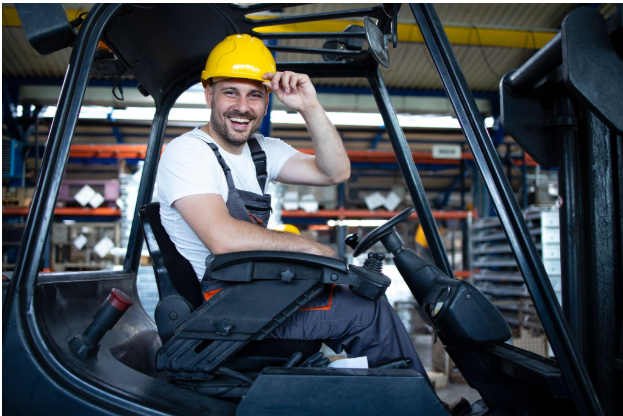
In a warehouse, port, factory, or construction site, almost everything moves on a forklift at some point. Pallets get loaded, trucks get unloaded, and tight delivery windows depend on one person steering a multi-ton machine through a busy floor. That is why a skilled forklift operator is worth far more than the hourly rate suggests.
A good one keeps goods undamaged, protects colleagues, and keeps operations flowing. A poor one can cause injuries, damaged stock, and costly downtime in a single shift. So what separates the two? Here is a practical guide to the qualities, credentials, and habits employers should look for.
The first checkpoint is documentation. Operating a forklift is a regulated, safety-critical task, and employers should confirm that a candidate holds recognized operator certification from a reputable training provider. Certification should be current and relevant to the equipment type the person will actually operate.
Beyond the certificate, ask about practical hours behind the wheel. Classroom theory matters, but real operating experience is what builds judgment. Also confirm that the operator is willing to complete a site-specific induction, since every facility has its own layout, traffic rules, and hazards.
Forklifts are not interchangeable. A counterbalance truck behaves differently from a reach truck, a narrow-aisle machine, an order picker, or a rough-terrain unit. Skilled operators understand the differences in steering, stability, load handling, and visibility. Ask precisely which machines the candidate has used, in what environments, and for how long. Someone who has spent years in a tidy indoor warehouse may need time to adjust to dusty outdoor yards, uneven ground, or high-bay racking. Matching experience to your actual setup avoids a steep and expensive learning curve.
Safe operation depends on understanding how a forklift stays upright. Skilled operators can explain concepts such as the load center, the rated capacity shown on the data plate, and the way a raised or off-center load shifts the machine’s balance. A simple test: ask how a forklift operator would handle an unusually tall, uneven, or unstable load. The best operators will talk about checking weight, securing the load, keeping forks low while traveling, tilting the mast back slightly, and traveling slowly. Vague answers are a warning sign.
Skill is not just about moving pallets quickly; it is about doing so safely. Look for operators who:
Safety is a habit. Ask for examples of situations where the candidate stopped work because something did not look right. Those stories reveal attitude better than any certificate.
Forklift work demands accurate judgment of distance, height, and clearance, often in cramped spaces. Skilled operators place pallets squarely, enter racking without scraping uprights, and reverse with confidence while checking mirrors and surroundings. A practical driving assessment is invaluable here. Ask candidates to perform a short course: picking up a pallet, stacking at height, maneuvering through a tight turn, and parking safely. How smoothly they handle each step tells you far more than an interview answer.
The role requires good vision, hearing, reaction time, and the stamina to stay focused through long shifts. In the UAE, there is an added factor: heat. Operators working outdoors or in poorly ventilated spaces must manage hydration, breaks, and fatigue carefully, because tiredness is a leading contributor to accidents. Employers should provide proper rest, shade, and water, and operators should show awareness of their own limits.
Modern operations rely on more than steering skills. Many sites use handheld scanners, warehouse management systems, labeling standards, and pick-and-put-away processes. An operator comfortable with these tools works faster and makes fewer errors. Basic understanding of inventory handling, such as first-in-first-out rotation and correct pallet labeling, adds real value.
Forklifts share space with pickers, loaders, drivers, and supervisors. Skilled operators communicate clearly, use hand signals where needed, and stay aware of colleagues at all times. They accept instructions, flag concerns politely, and cooperate under pressure. Basic language ability matters too, since safety instructions must be understood without confusion.
Past behavior predicts future performance. Ask for references from previous employers, and inquire about incidents, near-misses, or disciplinary issues. A clean record is a strong signal, but honesty about past mistakes and lessons learned can be just as telling. Be wary of candidates who claim they have never made an error.
Forklift accidents can cause serious injuries, damage to goods and racking, equipment repair costs, insurance claims, and project delays. Compared with those consequences, investing in thorough screening and training is inexpensive. Many employers also reduce risk by hiring through a provider that pre-screens candidates, verifies credentials, and offers replacement support.
A skilled forklift operator combines credentials, equipment knowledge, safety discipline, precision, and teamwork. Employers who test practical ability, check references, and set clear safety expectations build more productive and safer operations. For businesses that need qualified drivers quickly, partnering with a reliable agency can simplify the process and reduce hiring risk. Whether you are staffing a warehouse, a port, or a project site, finding a trained forklift operator in Dubai is much easier when candidates are screened for skills, safety awareness, and reliability.
Tabasco Human Capital is a home-grown UAE manpower solutions company, established in 2004, with a workforce of over 3,000. They supply trained, safety-focused personnel, including logistics and equipment operators, backed by rapid onboarding, QHSE standards, and dependable workforce management for projects across the country.