When investing in outdoor furniture, durability is key. Unlike indoor pieces, outdoor furniture must withstand harsh weather conditions, UV exposure, moisture, and temperature fluctuations. Choosing the right materials ensures your furniture remains stylish and functional for years.
When selecting the perfect outdoor chair, it’s essential to consider materials that can withstand the elements while providing comfort and style. Look for options crafted from high-quality teak, aluminum, or synthetic wicker, as these materials offer durability and resistance to weather conditions. Additionally, consider chairs with UV-resistant finishes to prevent fading and maintain their aesthetic appeal over time. By choosing the right materials, you ensure that your outdoor seating not only complements your space but also stands the test of time, providing a reliable and stylish solution for your outdoor living area.
In this guide, we’ll explore the most durable materials for modern outdoor furniture, their pros and cons, and what to look for when making a purchase.
Why Durability Matters in Outdoor Furniture
Outdoor furniture by Jardina Furniture faces constant exposure to:
- Sunlight – UV rays can fade and weaken materials.
- Rain & Humidity – Moisture leads to rust, mold, and warping.
- Temperature Changes – Extreme heat or cold can cause cracking and brittleness.
- Wind & Debris – Strong winds can topple lightweight furniture.
High-quality materials resist these challenges, ensuring longevity and reducing replacement costs.
Top Durable Materials for Modern Outdoor Furniture
- Powder-Coated Aluminum
Best for: Lightweight, rust-resistant, and sleek modern designs.
Pros:
- Rust-proof – Unlike iron, aluminum doesn’t corrode.
- Lightweight yet sturdy – Easy to move but holds up well in windy conditions.
- Low maintenance – Just wipe clean; no sealing or repainting needed.
- Powder-coated finish – Enhances durability and comes in various colors.
Cons:
- Can get hot in direct sunlight.
- Less weight may make it less stable in strong winds (unless weighted).
What to Look For:
- Thick, high-quality powder coating to prevent chipping.
- Reinforced frames for added stability.
- Stainless Steel
Best for: High-end, contemporary outdoor settings.
Pros:
- Extremely durable – Resists rust and corrosion.
- Modern aesthetic – Sleek and minimalist look.
- Heavyweight stability – Less likely to tip over.
Cons:
- Expensive compared to other metals.
- Can retain heat in sunny climates.
What to Look For:
- Marine-grade stainless steel (316 grade) for maximum rust resistance.
- Textured or brushed finishes to minimize fingerprints and glare.
- Teak Wood
Best for: Classic, natural, and long-lasting outdoor furniture.
Pros:
- Naturally weather-resistant – High oil content repels water and pests.
- Ages beautifully – Develops a silvery-gray patina over time.
- Extremely durable – Can last decades with proper care.
Cons:
- Expensive upfront cost.
- Requires occasional maintenance (oiling) to maintain color.
What to Look For:
- FSC-certified teak for sustainably sourced wood.
- Tight grain structure for better durability.
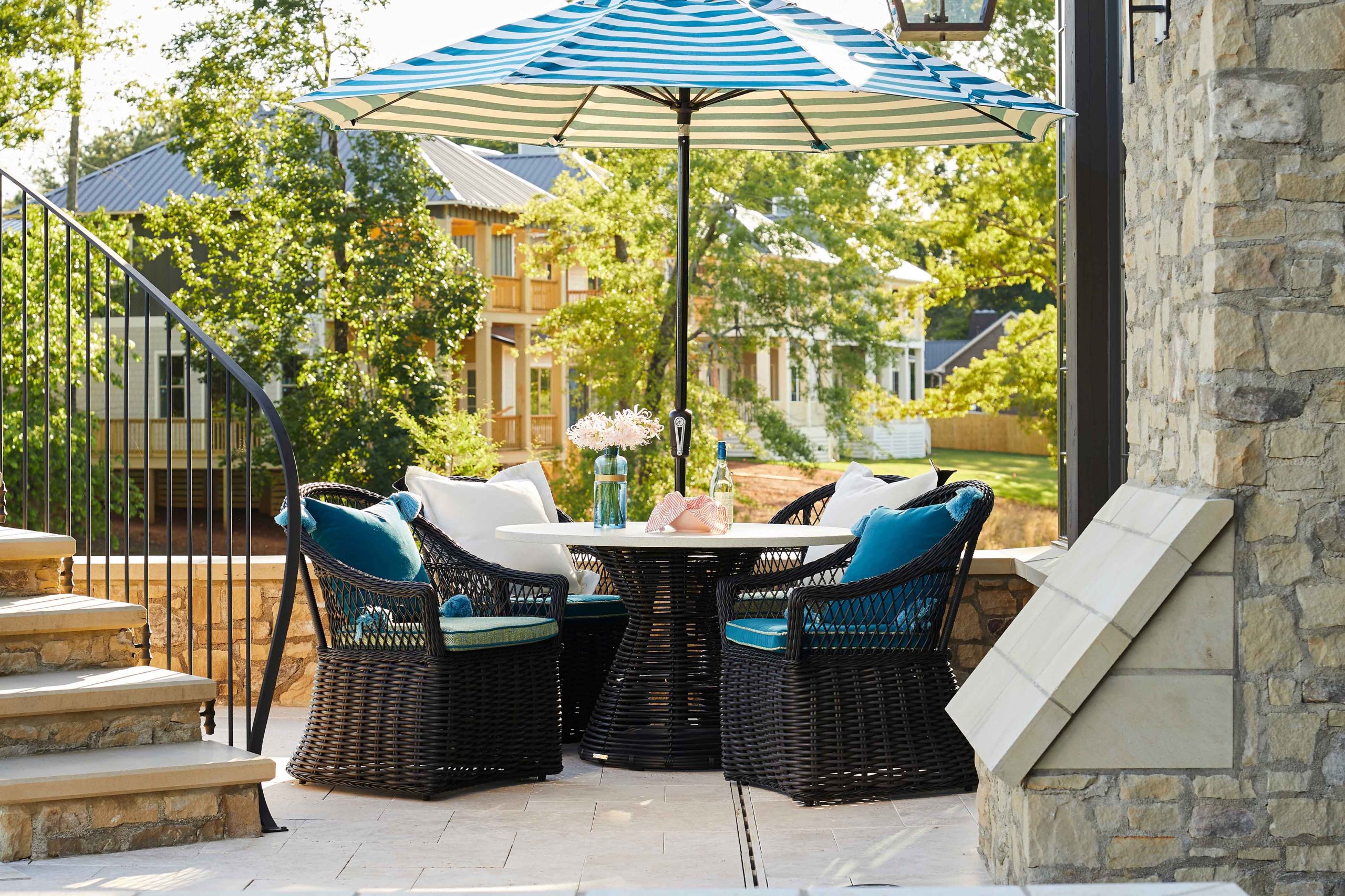
- Synthetic Wicker (Polyethylene/Rattan)
Best for: Coastal, boho, or contemporary styles.
Pros:
- UV and moisture-resistant – Won’t fade or crack like natural wicker.
- Lightweight & flexible – Easy to rearrange.
- Low maintenance – Hose off dirt easily.
Cons:
- Not as sturdy as metal or wood in extreme weather.
- Cheaper versions may degrade over time.
What to Look For:
- High-density polyethylene (HDPE) wicker for best durability.
- Aluminum or steel frames for added strength.
- Concrete
Best for: Industrial-modern and ultra-durable outdoor furniture.
Pros:
- Extremely sturdy – Resistant to wind, rain, and UV damage.
- Minimalist aesthetic – Perfect for modern outdoor spaces.
- Long lifespan – Doesn’t rot, rust, or fade.
Cons:
- Very heavy (difficult to move).
- Can crack in freezing temperatures if not sealed properly.
What to Look For:
- Fiber-reinforced concrete for added strength.
- Sealed surfaces to prevent water absorption.
- High-Density Polyethylene (HDPE) Lumber
Best for: Eco-friendly, maintenance-free outdoor furniture.
Pros:
- Made from recycled plastic – Sustainable and durable.
- Won’t splinter, rot, or fade – Resists moisture and insects.
- Feels like wood – Textured finish for a natural look.
Cons:
- Can be more expensive than traditional wood.
- Limited color options compared to painted metals.
What to Look For:
- UV-stabilized HDPE to prevent fading.
- Thick, solid construction (not hollow).
- Cast Iron
Best for: Traditional, ornate, and ultra-sturdy furniture.
Pros:
- Extremely heavy & stable – Won’t tip over in wind.
- Long-lasting – Can last generations with care.
Cons:
- Prone to rust if not properly coated.
- Very heavy (hard to move).
What to Look For:
- Powder-coated or galvanized finishes to prevent rust.
- Cushions for added comfort (cast iron can be hard).
How to Choose the Best Material for Your Climate
- Hot & Sunny Climates: Choose powder-coated aluminum, stainless steel, or UV-resistant synthetic wicker (won’t fade).
- Rainy & Humid Areas: Opt for teak, HDPE lumber, or rust-proof metals.
- Coastal Regions: Stainless steel (marine-grade) or synthetic wicker resist salt corrosion.
- Cold & Snowy Locations: Concrete, HDPE, or powder-coated metals handle freeze-thaw cycles best.
Maintenance Tips for Long-Lasting Outdoor Furniture
- Clean Regularly – Use mild soap and water to remove dirt.
- Store or Cover in Winter – Extend lifespan by protecting furniture from snow.
- Apply Protective Coatings – Re-seal teak and reapply powder coating if needed.
- Use Furniture Covers – Protect from UV rays and rain when not in use.
Final Thoughts
Choosing durable materials for modern outdoor conversation sets ensures your investment lasts for years. Powder-coated aluminum, stainless steel, teak, and synthetic wicker are among the best options for style and resilience. Consider your climate, maintenance preferences, and design aesthetic when making a selection.
By prioritizing quality materials and proper care, you can create a beautiful, long-lasting outdoor living space.