Physical Address
304 North Cardinal St.
Dorchester Center, MA 02124
Physical Address
304 North Cardinal St.
Dorchester Center, MA 02124

Most people who end up dependent on Xanax never saw it coming. A prescription for anxiety or panic disorder, a few weeks of genuine relief, and then a quiet shift where stopping the medication starts to feel impossible. That pattern plays out far more often than official statistics capture, partly because benzodiazepine dependence often hides inside what looks like a legitimate medical relationship. Understanding how that shift happens, what it does to the body, and what real recovery looks like is worth knowing whether you are personally affected or trying to support someone who is.
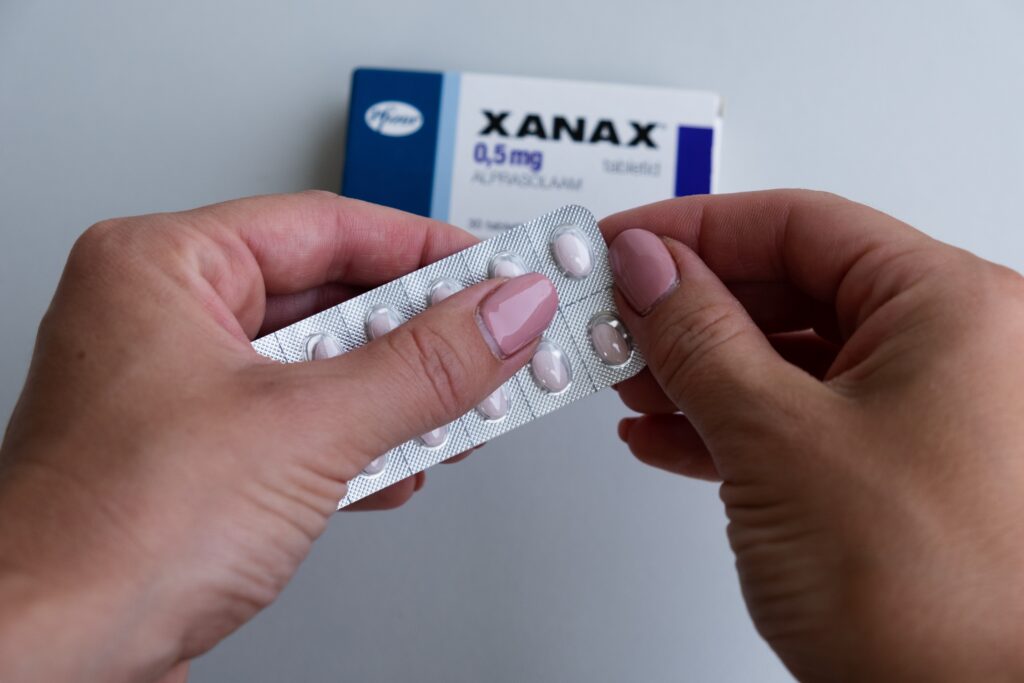
Xanax is the brand name for alprazolam, a short-acting benzodiazepine that enhances the effect of gamma-aminobutyric acid, commonly called GABA, in the brain. GABA is the nervous system’s primary inhibitory neurotransmitter. When Xanax amplifies its activity, the result is rapid sedation, reduced anxiety, and muscle relaxation. For someone in the grip of a panic attack, that relief can feel almost miraculous.
The problem is rooted in exactly that speed and potency. Alprazolam has a relatively short half-life compared to other benzodiazepines like diazepam, which means it leaves the body faster. The brain notices that drop, starts craving the return of that chemical calm, and begins down-regulating its own GABA production to compensate. Physical dependence can develop in as little as two to four weeks of regular use, even at prescribed doses. That is not a character flaw or a failure of willpower. It is straightforward neurochemistry.
One of the trickier aspects of benzodiazepine dependence is that many of its symptoms overlap with the anxiety conditions the drug was originally prescribed to treat. Someone withdrawing from Xanax may experience intense anxiety, insomnia, and restlessness, which can easily be misread as proof that they still need the medication rather than evidence that their body has become reliant on it.
There are clearer signals worth paying attention to. Tolerance is usually the first sign: needing a higher dose to achieve the same calming effect. After that comes preoccupation with the next dose, taking medication outside the prescribed schedule, or obtaining pills from sources other than the prescribing physician. Physical symptoms like tremors, sweating, and a heightened startle response between doses are also meaningful indicators.
The presence of two or more of those patterns is generally consistent with a substance use disorder as defined by the DSM-5. The number and severity of symptoms correspond to whether a clinician would classify the disorder as mild, moderate, or severe.
Withdrawal from benzodiazepines is one of the few categories of drug withdrawal that carries a genuine risk of life-threatening complications. Unlike opioid withdrawal, which is agonizing but rarely fatal in otherwise healthy adults, benzodiazepine withdrawal can produce grand mal seizures and a condition called delirium tremens. These risks place Xanax withdrawal in the same medical-risk tier as alcohol withdrawal, which makes sense because both substances act on the GABA system.
The timeline varies based on how long someone has been taking alprazolam, the average dose, and whether other substances are involved. Because alprazolam has a shorter half-life than many other benzodiazepines, withdrawal symptoms often begin sooner after the last dose.
| Phase | Typical Onset | Common Symptoms |
| Early withdrawal | 6 to 12 hours after last dose | Anxiety, irritability, insomnia, tremors |
| Acute withdrawal | 1 to 4 days | Intense anxiety, sweating, nausea, potential seizures |
| Peak symptoms | Days 2 to 5 | Seizure risk highest, confusion, elevated heart rate and blood pressure |
| Subacute phase | Week 1 to 2 | Gradual reduction of acute symptoms, ongoing anxiety and sleep disruption |
| Protracted withdrawal | Weeks to months | Intermittent anxiety, difficulty concentrating, mood instability |
Protracted withdrawal, sometimes called post-acute withdrawal syndrome, is a real and underappreciated phenomenon. Some people experience waves of anxiety, cognitive fog, and emotional flatness for months after stopping Xanax. This is not a sign that something has gone permanently wrong. It reflects the brain slowly recalibrating its own chemistry. Having that context can make those difficult months more bearable.
Given the seizure risk and the intensity of acute symptoms, attempting to stop Xanax abruptly without medical support is genuinely dangerous. This is not a situation where pushing through discomfort at home is a reasonable option for most people with significant dependence. Medical detox provides continuous monitoring, medication management, and a stable environment during the most physically volatile phase of withdrawal.
The standard medical approach involves a slow taper rather than abrupt discontinuation. Clinicians often substitute a longer-acting benzodiazepine like diazepam for alprazolam, then gradually reduce the dose over days or weeks. This allows the brain to adjust incrementally, which dramatically reduces seizure risk and makes the overall experience more manageable. Medications like beta-blockers or certain anticonvulsants may also be used to address specific symptoms.
For people whose dependence is severe, or who have tried to quit before without success, choosing a rehabilitation center for Xanax that offers integrated medical detox followed by structured therapy gives recovery the best possible foundation. Detox alone addresses the physical dependency; it does not address the psychological patterns that often sustain substance use.
The research on benzodiazepine use disorder treatment consistently points to a combination of medically supervised tapering and psychological intervention as the most effective approach. Cognitive behavioral therapy, often called CBT, has the strongest evidence base for treating the anxiety disorders that frequently underlie benzodiazepine dependence in the first place. Treating the root cause matters as much as managing the drug itself.
According to data from the Substance Abuse and Mental Health Services Administration (SAMHSA), benzodiazepines were involved in nearly 17 percent of all drug overdose deaths in the United States in recent years, frequently in combination with opioids. That figure underscores why addressing Xanax misuse through professional treatment rather than self-management is so consequential.
The appropriate level of care depends on the individual. Inpatient or residential treatment provides round-the-clock medical supervision, which is often necessary for people with severe dependence, co-occurring mental health conditions, or limited support at home. Intensive outpatient programs (IOPs) offer structured therapy several days per week while allowing people to remain in their own environment, which can be a practical fit for those with work or family obligations and a more stable home situation.
Several therapeutic approaches have shown meaningful results in treating benzodiazepine use disorder and the anxiety conditions often accompanying it.
Many people who have been dependent on Xanax carry a quiet fear that they will never feel calm again without it. That fear is understandable, especially during the months when the brain is still rebalancing. The reality, supported by both clinical evidence and the lived experience of people who have come through this process, is that the nervous system does recover. Anxiety can be managed through non-pharmacological means for most people, including exercise, sleep hygiene, therapy, and in some cases non-benzodiazepine medications prescribed under careful supervision.
Recovery is rarely linear. There are harder weeks and easier ones. People who do best over the long term tend to have built a real support structure around themselves: ongoing therapy, peer support, honest relationships with people who understand what they have been through. Aftercare planning, which should begin before someone even leaves a formal treatment program, is not a formality. It is a practical blueprint for what happens when the structured environment ends and regular life resumes.
Xanax dependence is not a permanent condition. It is a medical situation that responds to proper care, time, and consistent effort. Understanding the science behind it, the real risks of withdrawal, and the shape of effective treatment makes the path forward less abstract and, for many people, a little less frightening.