Physical Address
304 North Cardinal St.
Dorchester Center, MA 02124
Physical Address
304 North Cardinal St.
Dorchester Center, MA 02124

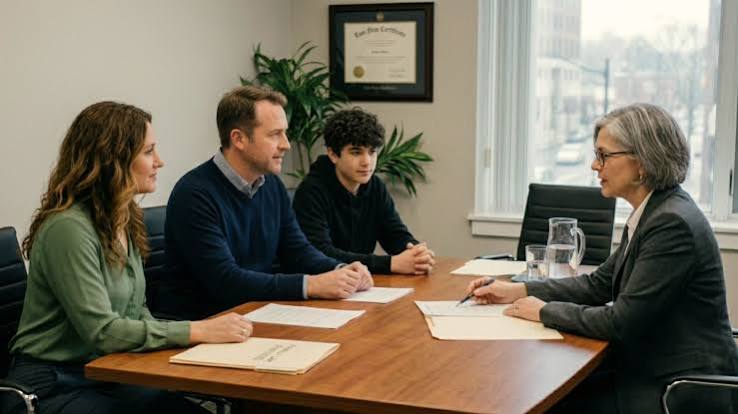
You may already feel the tension in this. You love your spouse. You love your children. You may love your stepchildren too, yet when money, property, and end of life decisions come up, the room changes. Old loyalties surface. Adult children remember promises. A stepparent worries about being left out. A biological parent worries that their children will lose what was meant for them. It may be time to get help.
That stress is common in blended families, and it usually starts long before anyone dies. It starts when a house is retitled, when retirement accounts name one person and not another, or when everyone assumes things will “work themselves out.” They usually do not. Blended family estate planning in Washtenaw County is about making your wishes clear so your spouse is protected, your children are not disinherited by accident, and your family avoids a probate fight that drains money and trust.
A stepparent is not automatically treated the same as a biological or adoptive parent for inheritance purposes. A stepchild is not automatically an heir either. That surprises many families. If you die without a will or trust, Michigan intestacy rules control who inherits, and those rules follow legal relationships, not emotional ones. If a child was never adopted by a stepparent, that relationship may carry little or no inheritance right on its own.
This is where people get hurt. A spouse may assume the children will “do the right thing.” Children may assume the surviving stepparent can stay in the home for life. Neither assumption is safe. Probate courts look at legal documents, title, beneficiary designations, and statute. The Michigan Probate Benchbook shows how detailed that process can become once a dispute lands in court.
If your goal is balance, a basic will may not be enough. You may want your spouse to have income and housing security, but you may also want certain assets preserved for your children from a prior marriage. Those two goals can clash if everything passes outright to a surviving spouse. Once that happens, the survivor often has full control to spend, gift, or redirect assets.
The hard part is that most families are not fighting about greed alone. They are fighting about fear, grief, and memory. One child says, “Dad wanted me to have the cottage.” A surviving spouse says, “We lived there together and I paid the taxes.” A stepchild feels pushed out of decisions. A biological child feels replaced. The legal issue is inheritance, but the human issue is belonging.
Consider a common example. A parent remarries and owns a home before the marriage. The new spouse moves in. Years pass. No trust is created. The deed stays the same, or maybe it changes to joint ownership without much thought. When the parent dies, the result may be very different from what everyone expected. The spouse may become sole owner, or the home may enter probate and create a fight between spouse and children. A few signatures made years earlier can override years of family assumptions.
Another pressure point is adoption. If a stepparent formally adopts a child, the legal relationship changes in a major way. Michigan provides guidance on the stepparent adoption process, and that process can affect inheritance rights because adoption creates a legal parent-child relationship. Some families want that clarity. Others do not, especially when the other biological parent is still part of the child’s life. Either choice has legal consequences.
Good planning is not just about signing a will. It means looking at the full picture. Your house has a title. Your life insurance has a beneficiary. Your IRA or 401(k) has a beneficiary too. Your bank account may have a transfer on death designation. Those parts do not always follow your will, which is why people think they have a plan when they really have a stack of conflicting instructions.
That is where an estate planning lawyer earns their keep. You need coordination. If your trust says your children inherit equally, but your retirement account names only your current spouse, the account usually goes to the named beneficiary. Michigan also offers practical financial guidance on managing financial affairs, which is useful if you are gathering account information and trying to organize what you own.
| Planning Choice | What It Can Do | Main Risk in a Blended Family |
|---|---|---|
| Simple will only | Names heirs and a personal representative | Assets with beneficiary designations or joint title may bypass the will |
| Outright gift to surviving spouse | Gives spouse full control and quick access | Children from a prior relationship may receive nothing later |
| Trust with spouse benefits and children remainder rights | Can provide income, housing, and later distribution to children | Needs careful drafting and administration |
| No plan | Leaves decisions to Michigan default law | Highest chance of probate conflict and unintended results |
Inventory every asset and every beneficiary. List the home, bank accounts, retirement accounts, life insurance, business interests, and anything with sentimental value. Then check how each asset passes at death. Many inheritance problems start because one old beneficiary form was never updated after remarriage.
Define what protection means for your spouse and your children. Some people want a spouse to stay in the home for life, with the home passing to children later. Others want equal shares for all children, including stepchildren, but only if that is written clearly. This is where stepparent inheritance planning becomes specific instead of emotional.
Meet with an estate planning lawyer and coordinate the documents. A will, trust, powers of attorney, deed strategy, and beneficiary designations should work together. If there is tension in the family, clarity matters even more. Good documents do not erase grief, but they do reduce the chance that your family has to sort out your intentions in court.
You do not need to solve every family feeling before you make a plan. You do need to make your wishes legally clear. That is how you protect the people you love without leaving them to guess. If your family includes a spouse, children from a prior relationship, or stepchildren, now is the time to speak with an estate planning lawyer and put the right structure in place.