Physical Address
304 North Cardinal St.
Dorchester Center, MA 02124
Physical Address
304 North Cardinal St.
Dorchester Center, MA 02124

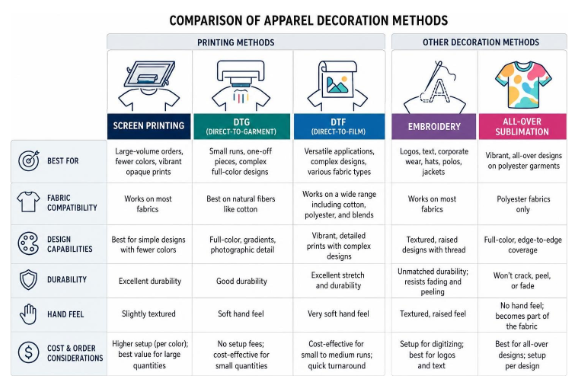
When embarking on a custom apparel project, understanding the various decoration techniques is paramount. Each method offers distinct advantages in terms of appearance, durability, feel, and cost-effectiveness for different order sizes. The choice impacts print longevity, unit economics, and ultimately, your production turnaround.
Let’s explore the primary methods used in custom and graphic apparel today:
Screen Printing has long been the industry standard, especially for large-volume orders. This technique involves pushing plastisol ink through a mesh screen onto the garment. Each color in your design requires a separate screen, making it ideal for designs with fewer colors or when a vibrant, opaque print is desired on darker fabrics. While setup costs can be higher, the per-unit cost drops significantly with larger quantities, offering excellent value and print durability. The resulting print typically has a slightly textured feel.
Direct-to-Garment (DTG) printing, in contrast, functions much like an inkjet printer for fabric. It sprays water-based inks directly onto the garment, allowing for intricate, full-color designs with gradients and photographic detail. DTG excels at small runs, one-off pieces, and designs with many colors, as there are no setup fees per color. The print often has a softer, “soft-hand feel” compared to traditional screen printing, especially on lighter garments. However, it generally works best on natural fibers like cotton and can be less vibrant on very dark fabrics without a white underbase.
Direct-to-Film (DTF) is a more recent innovation that combines aspects of both. With DTF, a design is printed onto a special film, then an adhesive powder is applied and cured. This film is then heat-pressed onto the garment. DTF offers exceptional versatility, working on a wide range of materials, including cotton, polyester, and blends. It produces vibrant, detailed prints with excellent stretch and durability, often boasting a very soft hand feel. DTF has gained popularity for its ability to handle complex designs and offer flexibility for various fabric types, often with quicker turnaround times than screen printing for smaller to medium runs.
Here’s a comparison of these popular decoration methods:
Beyond printing, Embroidery offers a classic, sophisticated, and highly durable decoration method. Instead of ink, designs are stitched directly onto the fabric using threads, creating a textured, raised effect. This method is particularly popular for corporate wear, hats, polos, and jackets, conveying a sense of quality and professionalism. The durability of embroidery is unmatched, resisting fading and peeling through countless washes. For those seeking truly premium custom embroidery, factors like stitch density, thread quality, and backing material are crucial for a refined finish. It’s an excellent choice for logos and text where longevity and a high-end aesthetic are priorities.
All-Over Sublimation is another unique technique, primarily used for polyester garments. This process involves printing a design onto special paper with sublimation inks, which then turn into a gas when heated and permanently dye the fabric fibers. The key advantage here is the ability to achieve vibrant, full-color, seam-to-seam printing, covering the entire garment with a design that won’t crack, peel, or fade. The print becomes part of the fabric itself, leaving no hand feel. It’s ideal for sportswear, fashion apparel, and intricate, bold patterns. Custom patches, whether embroidered, PVC, or woven, also offer a versatile way to brand apparel, often sewn onto hats, jackets, or bags for a distinct, tactile element.
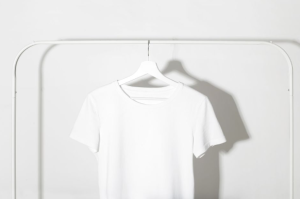
The foundation of any great custom apparel project is the blank garment itself. The quality, fit, and feel of the base material significantly influence the final product’s appearance and how it’s perceived.
Choosing the right blank garment involves more than just picking a color. I prioritize understanding the fabric composition, construction, and intended use. For instance, ring-spun cotton is often preferred over standard open-end cotton for its softer feel, smoother surface, and greater durability, making it an excellent canvas for detailed prints.
Fabric weight, often measured in ounces per square yard or GSM ratings (grams per square meter), also plays a role. Heavier fabrics tend to be more durable and offer a more substantial feel, while lighter fabrics are preferred for breathability and drape. Aiming for a retail-ready finish ensures that the blank garment not only looks good but also feels comfortable and holds up well to decoration and wear.
The market offers a wide array of wholesale apparel brands, each with its own niche and quality standards. Understanding these differences helps in making informed choices:
Beyond basic cotton, specialized materials like tri-blend fleece (a mix of polyester, cotton, and rayon) offer exceptional softness and drape, ideal for hoodies and sweatshirts. For activewear or uniforms where performance is key, moisture-wicking poly fabrics are essential, drawing sweat away from the body to keep the wearer dry and comfortable. Each brand and material caters to different needs, from basic promotional items to high-end retail merchandise.
Once the design is finalized and the garments are selected, the next phase involves the practicalities of production and order fulfillment. Streamlined workflows and efficient logistics are crucial for successful custom apparel projects.
Effective design is the cornerstone of impactful custom apparel. To ensure the best possible print quality, specific artwork requirements must be met. I always recommend using vector artwork (e.g., AI, EPS, SVG files) whenever possible, especially for logos, text, and graphics with sharp edges. Vector files are scalable to any size without loss of resolution, ensuring crisp, clear prints.
For raster images (like photographs), a minimum resolution of 300 DPI (dots per inch) at the final print size is typically required to avoid pixelation. Additionally, designs should be prepared in CMYK color matching for accurate reproduction on fabric, as screen colors (RGB) can differ from print colors. Utilizing print placement templates provided by the apparel decorator can help visualize the design on the garment and ensure correct sizing and positioning, such as for a vector graphic placement on a hoodie.
One of the most significant decisions in custom apparel production is choosing between print-on-demand (POD) and traditional bulk ordering.
Print-on-Demand (POD) services allow you to create products only when an order is placed. This model eliminates the need for upfront inventory investment and storage, making it ideal for startups, small businesses, or individuals experimenting with designs, such as humorous graphic-styled apparel. POD offers on-demand fulfillment, meaning items are printed and shipped directly to the customer as they are ordered. While the per-unit cost might be higher than bulk ordering, the absence of minimum order quantities and inventory risk makes it a flexible and accessible option. Turnaround times for POD are typically a few days for production plus shipping.
Bulk ordering, often associated with screen printing, involves producing a large quantity of items at once. This approach significantly reduces the per-unit cost due to volume tier pricing. It’s the go-to for events, uniforms, promotional giveaways, or businesses with consistent, high-volume sales. However, it requires upfront investment in inventory and managing storage. Rush delivery schedules are often available for both POD and bulk orders, though they typically incur additional fees. The choice depends on your budget, sales volume, and appetite for inventory management.
Custom and graphic apparel transcends personal expression; it’s a powerful tool for businesses, organizations, and events. Its versatility allows for a myriad of strategic commercial applications.
Businesses frequently leverage custom apparel for employee uniforms, fostering a sense of team unity and professionalism while reinforcing brand identity. For new hires, corporate branded onboarding merchandise is an excellent way to welcome them and instill company pride from day one. Many companies also establish online company stores, allowing employees or customers to easily purchase branded items, managing distribution efficiently.
Beyond internal uses, custom apparel serves as effective promotional giveaways at trade shows, conferences, or marketing campaigns. A well-designed t-shirt or hat can act as a walking billboard, extending brand reach long after an event.
Looking at current trends in September 2026, sustainability continues to be a major driver. There’s a growing demand for apparel made from sustainable organic cotton and recycled materials, reflecting consumer and corporate values. Furthermore, design aesthetics are leaning towards vintage streetwear aesthetics, oversized fits, and bold, graphic designs that blend nostalgia with contemporary style. All-over prints and unique textural elements are also gaining traction, pushing the boundaries of traditional garment decoration.
Navigating custom apparel can bring up several common questions. Here, I address some of the most frequent inquiries to help you make informed decisions.
The longevity of a graphic print on decorated garments largely depends on the printing method, ink quality, garment material, and, crucially, proper care. High-quality DTG, DTF, and screen prints can last for 50+ wash cycles or even longer if cared for correctly. To maximize print durability and prevent cracking or fading, I always recommend washing garments inside-out in cold water, using a mild detergent, and tumble drying on low heat or air drying. Avoiding harsh chemicals like bleach and direct ironing on the print will also significantly extend its life. Embroidery, by its nature, tends to outlast the garment itself.
For small-batch custom apparel, particularly orders with low setup costs and zero order minimums, Direct-to-Film (DTF) transfers and Direct-to-Garment (DTG) printing are generally the most cost-effective methods. These digital processes eliminate the need for expensive screen setup, making them economical for one-off items or small runs. While the per-unit cost might be slightly higher than screen printing for very large quantities, the overall cost for small orders is significantly lower due to minimal initial investment and reduced waste.
To ensure the highest quality print, specific file formats are preferred. For designs that need to be scaled without losing resolution, vector AI files (Adobe Illustrator) or print-ready PDF files are ideal. These formats contain mathematical paths rather than pixels, allowing for crisp lines and text at any size. For designs that include raster elements (like photos or complex textures), a high-resolution transparent PNG or TIFF file is best, provided it’s at least 300 DPI raster at the intended print size. Always ensure all fonts are outlined or embedded to prevent substitution issues.
In conclusion, custom and graphic apparel offers an unparalleled opportunity for brand storytelling and personal expression. From selecting the perfect blank garment to choosing the right decoration technique, every step contributes to the final impact. Understanding the nuances of different printing methods, the importance of quality manufacturing, and the strategic applications for businesses can transform a simple piece of clothing into a powerful statement. By embracing thoughtful design and a durable apparel strategy, you can ensure your custom pieces not only look fantastic but also stand the test of time, effectively communicating your message to the world.