Physical Address
304 North Cardinal St.
Dorchester Center, MA 02124
Physical Address
304 North Cardinal St.
Dorchester Center, MA 02124

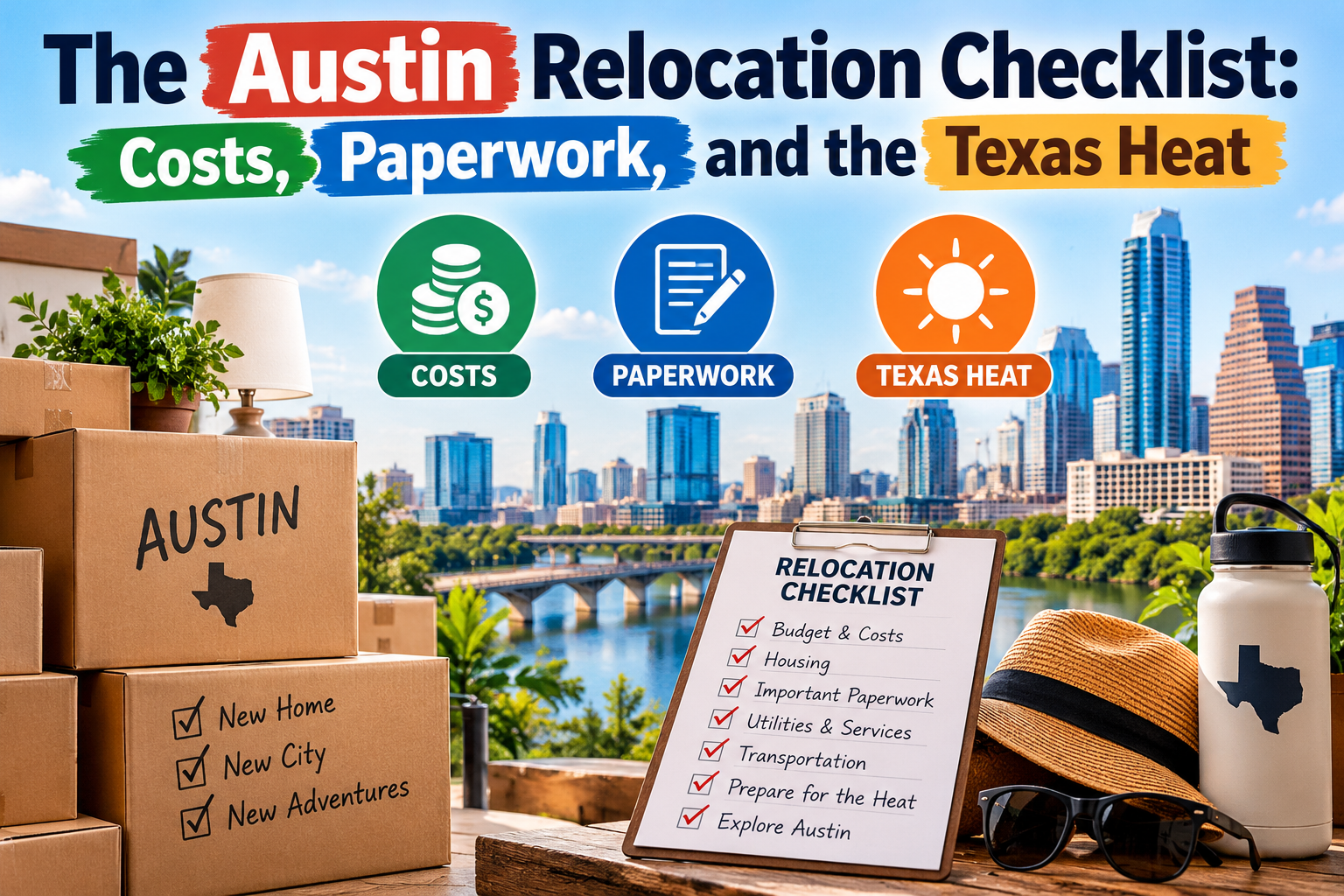
Austin keeps adding people, and it’s easy to see why. The job market is strong, the food scene is great, and there’s always a lake, trail, or live music venue nearby. But a move here comes with details that newcomers rarely hear about until they’re already in the middle of it.
This guide covers what to sort out before the truck shows up: where to live, what to budget for, which errands to run in your first few weeks, and how to handle moving day in a city where the weather can work against you.
Most people shop for a place first and learn about the area second. In Austin, flip that order. Traffic on I-35 and the major toll roads can turn a 10-mile commute into a long one, so where you live matters more than what the unit looks like.
Here’s a rough way to think about the main options:
Before you sign anything, visit at rush hour and again on a weekend. Drive the commute you’d actually make. An hour of test driving can save you a year of regret.
Texas has no state income tax, which is a real draw. But the savings can be offset elsewhere. Property taxes in Texas tend to be high, and renters often feel that cost indirectly through their rent. Utilities also run higher than many newcomers expect, mostly because of air conditioning.
A few budget items catch people off guard:
If you’re moving from a state with a lower housing cost, give yourself a cushion. If you’re coming from a pricier coastal city, Austin may feel like a relief, though the gap has narrowed in recent years.
Utilities in Austin are a little different depending on where you land. Within the city limits, electricity and water typically come through the city’s utility, while some suburbs use different providers. Natural gas, internet, and trash service may each have their own setup process.
Call or sign up online at least two weeks before you arrive. You want the power and water on when you walk in, not after you’ve carried the first boxes through a hot, dark house. Ask the provider about any deposit requirements, and find out whether your new place has gas or all-electric appliances. It affects both your bills and which appliances you can bring.
Moving to a new state means a short list of official tasks with real deadlines. Texas generally gives new residents a limited window to register vehicles and update driver’s licenses, so don’t leave this for later.
A sensible order looks like this:
Check the Texas Department of Motor Vehicles and Department of Public Safety websites for the current requirements. Fees and rules change, and a quick look before you go can save you a second trip.
This is the part of an Austin move that surprises people most. From late spring through early fall, afternoon temperatures often climb into the triple digits. That affects more than your comfort. Heat can damage some of your belongings and wear down the people moving them.
Items that don’t do well in a hot truck or a hot storage space include:
If you can, move early in the morning. Many crews start at sunrise in summer for exactly this reason. Pack a cooler with water and electrolytes, and keep your plants and valuables in your own car with the air conditioning running.
If you’re moving in July or August and have flexibility, consider a weekday move. Weekends and the end of the month are busy, and a rushed crew in 100-degree weather isn’t good for you or your belongings.
Austin’s housing stock is varied. A move into a South Congress bungalow looks nothing like a move into a downtown high-rise or a new house in a suburb still under construction. Each one has its own quirks.
High-rises and apartments. Many buildings require you to reserve the freight elevator, and some limit move-in hours. Your building may also require a certificate of insurance from your movers. Call the property manager as soon as you have a date, because popular time slots fill up quickly.
Older homes. Narrow doorways, steep porch steps, and tight hallways are common in central neighborhoods. Measure your largest furniture pieces against your new doors and stairwells before you move them, not after.
New construction. Roads may not be finished, driveways may be unpaved, and addresses may not show up correctly in navigation apps. Share clear directions with whoever is helping you, and ask the builder about any restrictions on large trucks.
HOA communities. Some require advance notice for moving trucks and have rules about where they can park. A quick call to the HOA office can head off a fine.
Some people can handle a move with a rental truck and a few friends. For a studio apartment and a short drive, that can work well. But once you add stairs, heavy furniture, a high-rise elevator reservation, or a move that crosses state lines, the math starts to change.
Think about what your time and your back are worth, and be honest about the risks. A dropped dresser, a damaged doorframe, or a scratched hardwood floor can cost more than the savings from doing it yourself. Rental trucks also come with fuel, insurance, and equipment costs that people often forget to include.
This is where a professional moving team earns its keep, especially in a city with so many building rules and summer heat to manage. A crew that has worked Austin moves before already knows how to deal with elevator reservations, tight access, and loading in the morning cool. A family-owned company like BC Brothers Moving, which is licensed and insured and offers local and long-distance moving, packing, and storage in the Austin area, is one example of the kind of local option worth getting a quote from.
Whoever you consider, ask a few direct questions:
Get at least two or three quotes, and be wary of any estimate that comes in far below the others. A price that looks too good usually has extra charges waiting behind it.
Closing dates slip. Leases overlap. A new apartment might not be ready for two weeks. Short-term storage can solve all of these without forcing you to rush a decision.
If you’re using storage, keep a few habits in mind. Label every box by room and contents. Keep an “essentials” box you can reach without unpacking everything else. Ask whether the unit is climate-controlled or at least well ventilated, since Austin’s heat can be hard on furniture, electronics, and paper goods left sitting for weeks.
General packing advice applies anywhere: use sturdy boxes, wrap fragile items individually, and don’t overload anything you can’t lift. But a few habits are especially useful for a move into Central Texas.
Once the boxes are in, resist the urge to unpack everything in one weekend. Start with the kitchen, bedroom, and bathroom. The rest can wait.
Then spend a few weeks learning the city. Find your grocery store, your pharmacy, and a doctor. Try different routes to work. Visit a farmers market, walk part of a greenbelt trail, and find a coffee shop that doesn’t feel like a tourist stop. Austin rewards people who explore it a little at a time.
Don’t skip the small administrative tasks either. Update your address on subscriptions, set up renter’s or homeowner’s insurance, and confirm that your mail is arriving. These feel minor, but they’re the ones that cause trouble when they’re forgotten.
A good Austin move comes down to a handful of decisions made early. Choose your neighborhood based on how you’ll actually live, not just what the listing looks like. Budget for utilities, tolls, and fees beyond rent or the mortgage. Handle your vehicle and license deadlines on time, and plan around the heat so your belongings and your crew are both safe.
Ask your building about move-in rules before you pick a date, and decide honestly how much help you need. Then give yourself room to settle. Moving to a new city is a big change, and the first month goes better when you treat it as a process instead of a race.