Physical Address
304 North Cardinal St.
Dorchester Center, MA 02124
Physical Address
304 North Cardinal St.
Dorchester Center, MA 02124

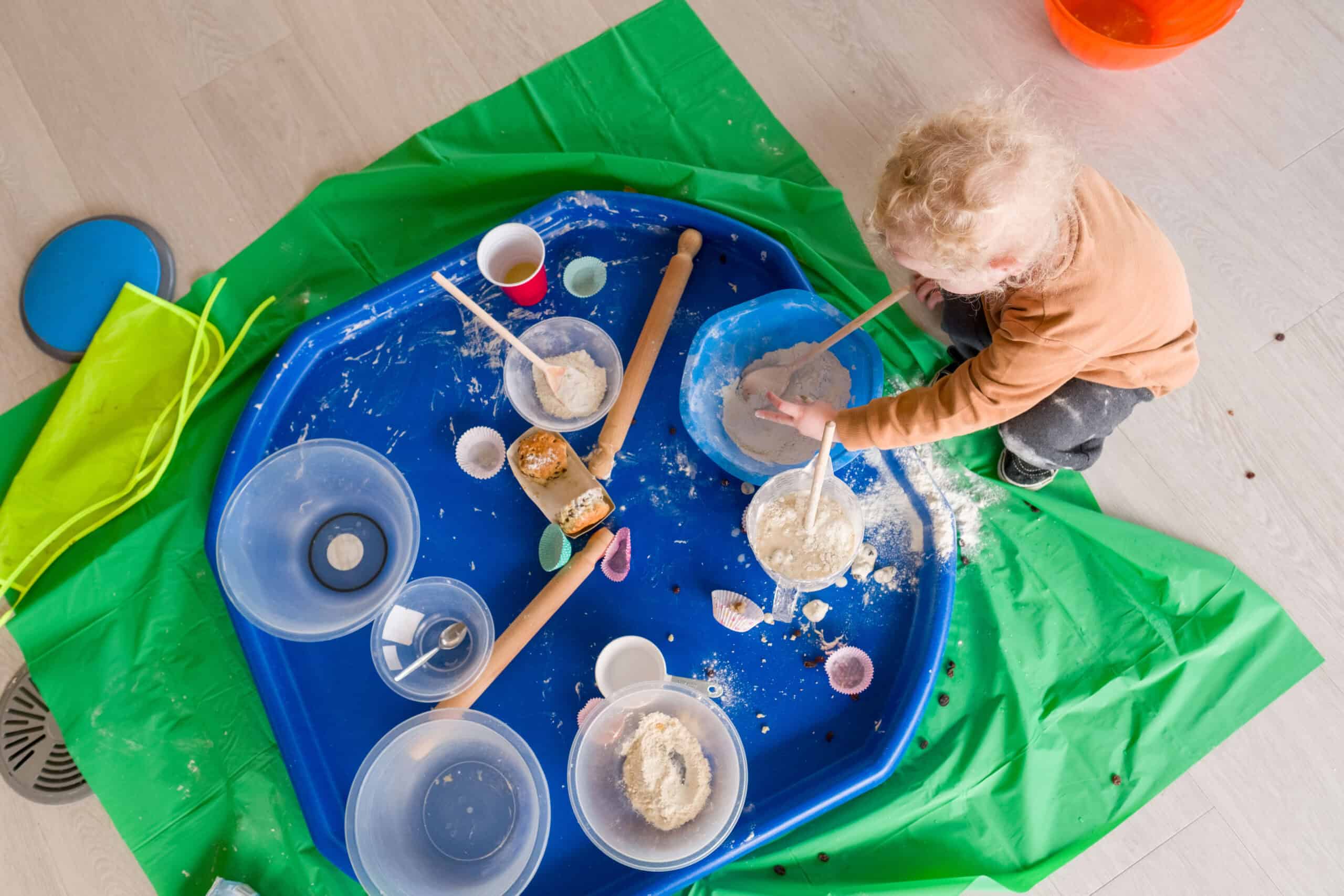
Toddlers are natural investigators. They squeeze objects to see what happens, drop toys repeatedly, splash water, and explore unfamiliar textures with remarkable curiosity. Although these actions may look like ordinary play, they reflect the earliest stages of scientific thinking. Young children learn about the world by interacting with it, observing changes, and repeating experiences to understand cause and effect. Sensory play provides a practical way to encourage this curiosity while introducing foundational concepts such as texture, temperature, movement, volume, and basic physical properties.
For parents exploring a Toddler Program in Willow Glen, understanding the educational value of sensory activities can help when evaluating early learning environments. A thoughtfully planned toddler curriculum should provide opportunities for children to investigate materials, experiment with simple ideas, and communicate what they notice. These experiences do not require formal science lessons. Instead, everyday activities can introduce scientific concepts through hands-on discovery.
Sensory play involves activities that engage one or more of the senses, including touch, sight, hearing, smell, and, when appropriate, taste. For toddlers, these experiences create direct connections between physical actions and observable results.
When a child pours water from one container into another, for example, they begin noticing how liquids move and how container shapes affect their appearance. Similarly, pressing play dough introduces ideas about pressure, shape, and material properties.
These experiences encourage early scientific habits:
At this age, the goal is not memorizing scientific terminology. It is developing curiosity and an interest in understanding how things work.
Water tables and supervised pouring activities offer simple introductions to volume, flow, and capacity.
Toddlers can use cups, funnels, spoons, and different-sized containers to transfer water between vessels. Educators can ask questions such as, “Which cup holds more?” or “What happens when we pour slowly?”
Children begin noticing that water takes the shape of its container and moves from higher positions to lower ones. They also develop hand-eye coordination while practicing controlled movements.
Close supervision is essential because even small amounts of standing water can present a drowning hazard.
A collection of safe materials such as smooth stones, large leaves, soft fabric, and textured cardboard can introduce toddlers to the physical characteristics of objects.
Children can touch, compare, and sort materials according to how they feel. An educator might invite them to identify which objects are rough, smooth, soft, or firm.
These activities introduce basic material classification and encourage descriptive vocabulary. They also help children understand that objects can share certain characteristics while remaining different in other ways.
Materials should be age-appropriate, clean, and free from choking hazards, sharp edges, or toxic substances.
Finger painting and washable paint activities can demonstrate how colors change when combined.
A teacher might provide two primary colors and invite children to mix small amounts using brushes or their fingers. Watching a new color appear gives children a visible example of cause and effect.
Educators can encourage observation by asking what changed and whether the same result occurs when different colors are combined.
The process is more important than creating a finished artwork. Children learn through experimentation, repetition, and noticing differences.
Sound-based activities introduce another interesting area of scientific exploration. Toddlers can experiment with child-safe drums, shakers, bells, and other simple instruments.
They may discover that tapping gently produces a different sound from tapping firmly. Shaking an object, striking a surface, or changing the speed of movement creates additional variations.
These experiences help children notice relationships between actions and sound while developing listening skills and coordination.
Rolling balls down ramps is an effective way to introduce early physics concepts.
Children can observe how a ball moves across different surfaces or how changing the ramp’s height affects its movement. Educators can encourage predictions before each attempt.
Simple questions such as “What happens if we make the ramp steeper?” help toddlers connect their actions with observable outcomes.
Effective sensory activities require more than providing interesting materials. Educators should create a safe environment where children can explore independently while receiving appropriate guidance.
A few considerations make these experiences more productive:
Adults should resist the temptation to provide immediate answers. Asking open-ended questions and allowing children time to investigate encourages independent thinking.
Families interested in learning more about the local educational environment can view the school’s location on Google Maps and arrange a visit to discuss its approach to hands-on learning.
Simple sensory exploration can begin during infancy, with activities adapted to developmental abilities. Toddlers can participate in increasingly varied experiences involving water, textures, movement, and sound.
It can support early problem-solving by encouraging children to experiment, observe outcomes, and adjust their actions. These abilities develop gradually through repeated experiences.
No. Everyday materials such as water, cardboard, fabric, and washable paint can provide valuable learning opportunities when selected and supervised appropriately.
Sensory play gives toddlers an accessible introduction to the principles behind scientific exploration. By touching, observing, comparing, and experimenting with familiar materials, children begin understanding how the physical world behaves. When educators build these experiences into everyday classroom routines, they support curiosity, language development, early reasoning, and confidence. The strongest foundation for science learning often begins with something simple: the freedom to explore and discover.