Physical Address
304 North Cardinal St.
Dorchester Center, MA 02124
Physical Address
304 North Cardinal St.
Dorchester Center, MA 02124

We put real thought into the things we wear every day: the everyday earrings, the bag that goes with everything, the watch that just feels like you. Yet the one accessory our dogs wear every single day often gets picked in about thirty seconds at a checkout counter.
A dog tag is a small thing doing two big jobs. It is the quickest way for a stranger to reach you if your dog slips out the gate, and it is also a little piece of your dog’s personality hanging right under their chin. Get it right, and it quietly does both for years.
This guide walks through what to engrave, which materials hold up, how to pick a style you will love, and why QR tags are worth a look for modern pet parents.
Space on a tag is limited, so every line should earn its place. Think about what a kind stranger needs in the first minute after finding your dog.
The essentials:
Helpful extras if space allows:
One privacy tip: many pet parents leave the dog’s name off the front or keep it small, especially for dogs who will follow anyone who calls them by name. It is a personal call, so choose what feels right for you.
Also check your local rules. Many cities and counties require dogs to wear a rabies tag or license tag in addition to an ID tag, so plan for a small cluster on the collar.
A tag lives a rough life. It splashes through puddles, clanks against food bowls, and gets dragged across sidewalks. The material decides whether your phone number is still readable a year from now.
| Material | How the design is applied | Best for |
|---|---|---|
| Stainless steel | Laser engraved into the metal | Everyday wear, water-loving dogs, long-term legibility |
| Aluminum | Full-color printed design | Photo tags and colorful, playful looks; lighter weight |
Stainless steel with deep laser engraving is the workhorse choice. The text is cut into the metal rather than printed on top, so it is made to stay legible for years. It also resists rust, which matters if your dog lives for the lake or the sprinkler.
Aluminum is lighter and lets you print full-color designs, including your dog’s actual photo. It is a fun choice for small dogs or for a second, style-forward tag.
Whatever you pick, skip tags with stick-on lettering or shallow stamping. Those tend to wear down fastest, and a tag that can’t be read is just jewelry.
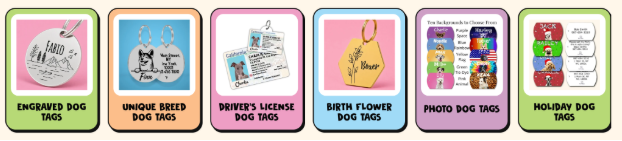
Here is where the fun starts. Your dog’s tag can coordinate with their collar, nod to their breed, or celebrate a special date. A few popular directions:
A good rule of thumb: keep one durable, everyday ID tag on at all times, then treat seasonal or photo tags as a fun extra. Brands like PawFurEver offer personalized dog tags across most of these styles, so you can mix practical and playful without hunting across a dozen shops.
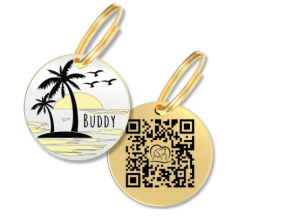
A classic tag fits a few short lines. A QR code tag opens up much more space. When someone scans the code with any smartphone camera, it pulls up your dog’s contact profile, with no special app needed on the finder’s end.
That profile can hold far more than a tag ever could: several phone numbers, your vet’s details, allergies or medications, and a note about your dog’s temperament. You can usually update it anytime, so a new phone number or a move doesn’t mean ordering a new tag.
One important clarification: a QR tag is not a GPS tracker. It doesn’t show your dog’s live location. It simply helps the person who found your dog reach you quickly and with the right information. Many pet parents choose a tag with engraved text on one side and a QR code on the other, so a finder has two easy ways to get in touch.
If you want to see how they look, PawFurEver’s QR code dog tags pair a QR back with a decorative engraved front.
Pick a size that suits your dog. Most ID tags land somewhere around 1 to 1.5 inches. Toy breeds and cats are more comfortable with smaller, lighter tags, while big dogs can easily carry a larger shape with more room for text. If the tag hangs low enough to dip in the water bowl, it is probably too big.
Attach it securely. A sturdy stainless steel split ring on the collar’s D-ring holds better than a thin S-hook, which can bend open during play.
Keep it clean. A quick wipe with a damp cloth during bath time keeps the engraving easy to read. For a quieter walk, a rubber tag silencer helps cut the jingle.
Check it every few months. Run your thumb over the text and make sure it is still crisp. Replace the tag right away if:
Personalized tags make surprisingly meaningful gifts, because they are useful every day and made just for one specific pet. A few moments where they shine:
Just double-check the spelling of the dog’s name and the phone number before ordering. With personalized items, accuracy is everything.
Your dog’s tag is one of the smallest things you’ll buy for them and one of the most important. Choose a durable material, keep the details current, and pick a style that makes you smile every time it jingles by. That combination brings real peace of mind, and it looks pretty cute too.
Yes. A microchip needs a scanner at a vet or shelter, while a tag can be read by anyone on the spot. They work best together.
It is optional. Your phone number matters most. Many pet parents list just a city, or use a QR tag so they control what details are shared.
Check it every few months and replace it whenever the text starts to wear or your contact details change.
No. A QR tag links to a contact profile so a finder can reach you. It is not a GPS device.
This post was contributed by the team at PawFurEver, makers of personalized pet ID tags, QR pet-safety tags, waterproof collars and leashes, and custom pet portraits for pet families across the US and Canada.