Physical Address
304 North Cardinal St.
Dorchester Center, MA 02124
Physical Address
304 North Cardinal St.
Dorchester Center, MA 02124

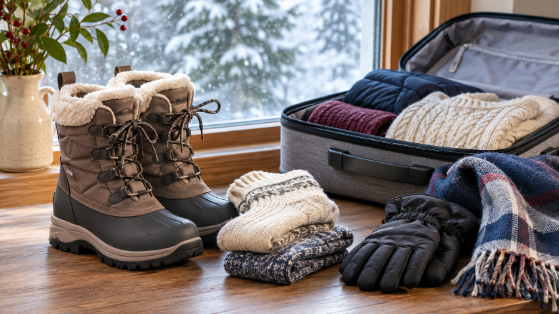
Few things are more unpleasant than having freezing feet and spending all your time hunting for something to warm them up.
Choose winter boots to match the weather and walking plans, then check how your socks fit. A comfortable pair should keep feet dry and warm without crowding your luggage.
This guide covers:
It’s important to know what the forecast will be throughout your stay. Will it be wet and rainy, or snowy?
There are also conditions to consider other than weather, such as where you are…
…or how much time you might spend both walking around and standing still.
Also consider changing conditions; depending on the temperature, it may be warm enough for snow to start melting and you find yourself unexpectedly trudging through standing water and slush.
For trips with regular snow and slush, comparing women’s snow boots is a sensible starting point.
You’ll want:
There are plenty of options to choose from once you know which features you would benefit from.
Warmth is clearly important, but you’ll also want good purchase on the surface you’re walking over.
The sole of most shoes will be fairly smooth and provide poor grip on packed snow. It’s desirable to have fairly deep lugs. As far as heel height goes, it is probably unwise to wear high heels around on snow.
No boots can be recommended as completely non-slip on smooth ice, so it is sensible to shorten your stride and take care. Traction devices can be very useful, depending on the conditions and regulations, but should be removed before entering buildings.
To varying extents, the boots will also prevent water from reaching inside:
Also check whether there is a gap behind the tongue.
Finally, extremely bulky and heavy boots may be tiresome to walk long distances in on any given day.
Avoid cramming thick socks into a snug boot. A tight fit can limit toe movement and circulation.
Keep the heel secure, leave room to wiggle your toes, and try the boots with the socks you plan to pack.
As with choosing an amount of insulation to include in the boot, you want a good quality material for your socks too; preferably merino wool or suitable synthetic blends to wick away moisture.
You can imagine how unpleasant it would be to finish a long walk and discover that your socks were soaking wet, and this could happen if they were made of cotton.
A practical option is to wear one good-quality, thick sock for most days out exploring, with the option of adding a second thin pair underneath if necessary.
However, if this causes your foot to be over-packed in the boot, it is unlikely to be beneficial.
So, once you’ve purchased your boots:
If your intended socks make the boots too tight, try a different sock thickness or boot size before traveling.
Cold-weather comfort is not just a question of how much insulation a boot contains. Wet socks, sweat, and snow that enters at the cuff can all leave feet feeling cold and be a major concern.
As an indication of how quickly frostbite can occur, the National Weather Service states that with a wind chill factor of -19°F or lower, exposed flesh can take as little as 30 minutes to freeze.
Think of your footwear as a small system. Each part has a job:
When looking at a boot’s rating for low temperatures, be a little cautious. It is a general rating and cannot know every person’s circulation, activity level, or exposure time.
When you arrive back in a warm environment, slacken off your boots or ideally, take them off completely, to allow any damp to evaporate. If applicable, take out any inserts to speed this process.
Try to avoid excessive direct heat, such as putting your boots on top of a heater, as it may harm certain materials.
Have spare, dry pairs of socks readily available so you can quickly change into them if your feet get damp.
It can pay to think ahead when packing your clothing, particularly with a large item like boots.
As long as they are reasonably comfortable, it makes sense to wear your largest pair while traveling and change once you arrive.
If your trip comprises both city and mountains, you may wish to bring another pair of lighter shoes to wear around the hotel and out at night.
Dedicated ski boots serve a different purpose and should not replace comfortable boots for walking around town.
It’s also handy to have all of the following together in one place:
As always, keep an eye on the weather if planning any lengthy outdoor excursions, and spend more time indoors if it’s very cold.
If at any stage you feel loss of feeling or pain, get out of the cold, dry off and receive appropriate treatment as soon as possible if you believe you may have frostbite.
Select appropriate boots for the conditions and your proposed walks, and good socks to match.
Test everything together before leaving and make a plan for slush, ice and rain to avoid uncomfortable surprises during the trip.