Physical Address
304 North Cardinal St.
Dorchester Center, MA 02124
Physical Address
304 North Cardinal St.
Dorchester Center, MA 02124

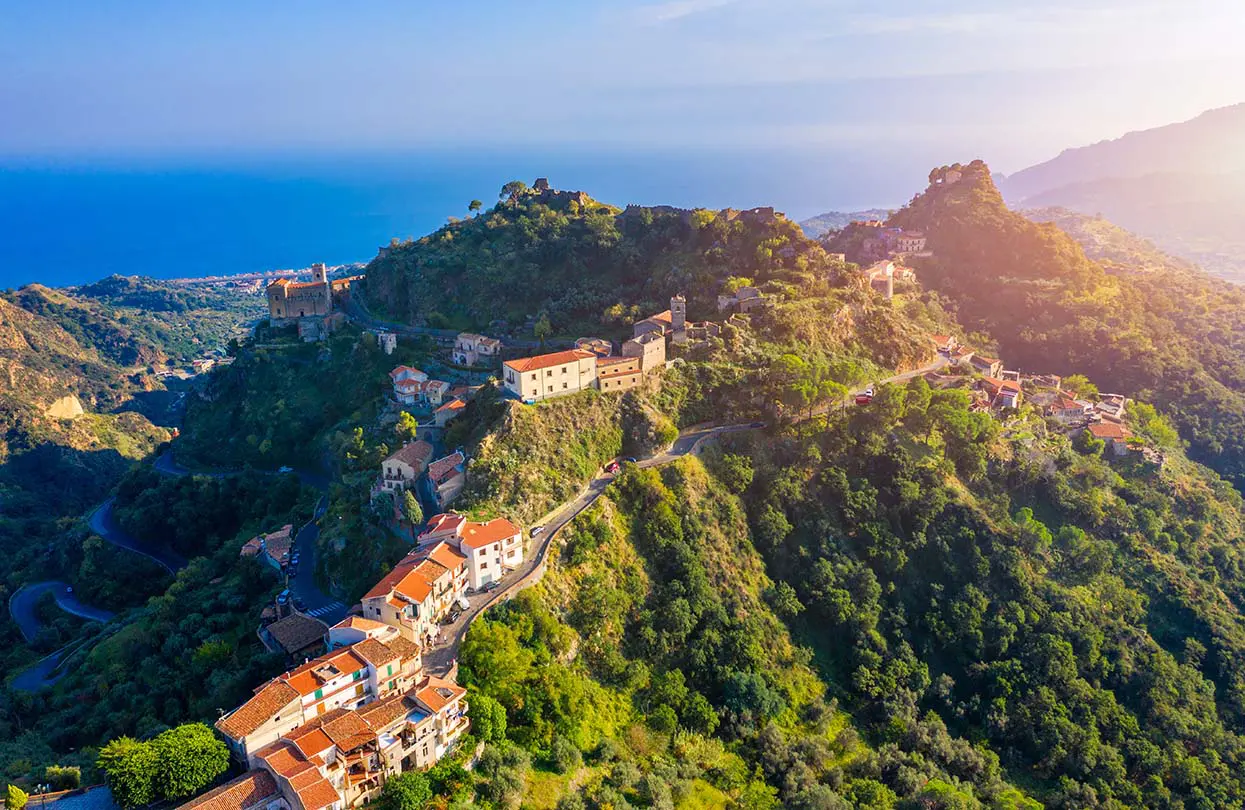
Italy’s great cities reward energy. Rome can fill a week with monuments; Florence presents another masterpiece around almost every corner; Venice constantly encourages one more bridge, church or palazzo. Yet some of the country’s most satisfying short breaks work in the opposite way. They reduce the number of decisions.
A compact historic centre, a quiet lake, a small island or a landscape reached without an ambitious itinerary can create a different kind of luxury. There is more time for lunch, fewer reasons to cross town and less pressure to transform every hour into sightseeing. For travellers seeking privacy and atmosphere, smaller destinations often make it easier to experience Italy at a human pace.
Scale changes the rhythm of a journey.
In a large city, even a relaxed day may involve reservations, transport and choices between competing attractions. A smaller destination removes much of that friction. Breakfast can lead naturally into a walk; a walk can become lunch; the afternoon can remain undecided.
This does not mean choosing somewhere with nothing to see. The strongest intimate escapes contain enough history, architecture, food and landscape to remain interesting without demanding constant movement.
The attraction is concentration rather than abundance.
A memorable church, one exceptional restaurant and a landscape worth walking through can provide more pleasure over two days than an itinerary containing ten major sights.
Matera demonstrates how effectively architecture can slow a trip down.
Its historic districts unfold across stone, steps and ravines rather than conventional boulevards. Walking through the Sassi encourages attention to changing levels, small passages and views that appear unexpectedly between buildings.
The city also lends itself particularly well to accommodation with a strong physical identity. Historic stone structures and interiors connected to Matera’s geology can make returning to the hotel feel like a continuation of exploring the city.
That connection extends to wellness. Travellers who choose to unwind at the Palazzo Gattini Spa encounter a spa created among old cisterns and stone-carved spaces, with water and subdued lighting becoming part of the experience.
Matera works particularly well for couples who want culture without building every day around formal museum visits.
Italy’s northern lakes are hardly secret, but Lake Orta offers a different scale from the country’s largest and most internationally famous waterside destinations.
Orta San Giulio occupies a peninsula opposite the tiny Isola di San Giulio. Its centre gathers old residences, narrow lanes and Piazza Motta around the waterfront, while the Sacro Monte rises above the village.
The geography naturally simplifies the day.
There is no requirement to cover enormous distances. A boat trip to the island, a lakeside lunch and a walk towards the Sacro Monte can comfortably coexist without creating a packed schedule.
Lake Orta’s appeal therefore comes partly from what travellers do not need to do. The landscape is close, the village is compact and the water is almost always present.
Asolo makes a persuasive argument for travelling somewhere precisely because it is small.
Set among the hills of Veneto, the town has a medieval profile dominated by the Rocca, with villas, arcaded streets and views stretching across the surrounding countryside. Its mild microclimate has also supported olive cultivation alongside the cypresses and greenery of the hills.
The centre can be explored slowly rather than conquered.
A morning might include the castle area and historic streets before lunch. The afternoon can belong to a walk through the surrounding hills, with no concern about missing a long catalogue of essential monuments.
This is exactly why a place such as Asolo works for an intimate escape. A small number of experiences can fill the weekend without filling the timetable.
An island introduces another form of privacy: psychological distance.
Procida lies within easy reach of Naples, yet the boat journey creates an immediate break between the mainland and the stay. Its compact size also means there is little incentive to spend the day travelling between attractions.
The pleasure comes from local geography. Harbours, pastel-coloured buildings, narrow streets and sea views establish a strong visual identity without requiring a conventional sightseeing circuit.
A small island encourages repetition in a positive sense. Travellers may return to the same café, pass through the same square several times or recognise the route back to their room by the second evening.
That familiarity can make a two- or three-night stay feel surprisingly settled.
An intimate holiday does not necessarily mean choosing somewhere remote.
For many travellers, complete isolation quickly becomes restrictive. Restaurants, cafés and local life still matter. The ideal balance is often a destination lively enough to explore but small enough that withdrawing from activity remains easy.
This is where historic towns and compact islands have an advantage.
A couple can spend the morning among streets, shops and restaurants, then retreat to a private terrace, spa or quiet room without travelling far. Privacy becomes something available when wanted rather than imposed throughout the stay.
That distinction is important. The aim is not to escape people entirely, but to regain control over when the outside world demands attention.
Wellness is often added to travel as another appointment. On an intimate escape, it can replace an appointment.
Instead of squeezing a treatment between sightseeing and dinner, an afternoon can simply be given over to rest. The smaller itinerary makes that decision easier because there is less anxiety about what is being missed elsewhere.
The surroundings can also strengthen the experience.
In Matera, stone and underground spaces create a very different atmosphere from a conventional contemporary spa. On a lake, the view itself can establish calm. In the countryside, silence and access to nature may matter more than an extensive treatment menu.
Wellness becomes most convincing when it belongs to the destination rather than feeling imported into it.
Start with geography rather than a list of attractions.
Ask whether the destination can be explored largely on foot, whether good food is available nearby and whether the accommodation is somewhere you would happily spend part of the afternoon. A beautiful view or memorable interior becomes more important when the intention is to slow down.
Two or three nights are often sufficient. Short stays work particularly well because smaller destinations do not require the logistical preparation of a major city break.
Avoid overbooking them.
One dinner reservation and perhaps one planned cultural or wellness experience may be enough. The remaining hours should have space to change according to weather, appetite and mood.
Traditional luxury is easy to recognise: generous rooms, excellent service, fine materials and carefully prepared food. Contemporary travellers increasingly add another scarce resource to that list—undivided time.
Small destinations protect it unusually well.
There is less commuting between attractions, less pressure to maximise the trip and more opportunity to notice details that would disappear during a hurried itinerary. A landscape can be watched rather than photographed and immediately left behind. Lunch can continue because there is nowhere urgent to reach.
Matera, Orta San Giulio, Asolo and Procida offer very different environments, but they share this ability to reduce the scale of travel.
Sometimes the most remarkable Italian escape is not the one offering the greatest number of possibilities. It is the one that makes choosing fewer of them feel entirely sufficient.