Physical Address
304 North Cardinal St.
Dorchester Center, MA 02124
Physical Address
304 North Cardinal St.
Dorchester Center, MA 02124

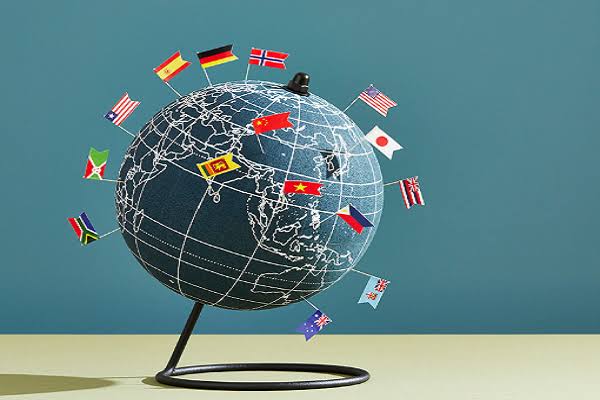
Going international used to be something only big companies did. Now a small business, even a one-person operation, can have customers, contractors, and suppliers scattered across the world almost from day one. That is a genuine shift, and mostly a wonderful one. But there is a catch that catches nearly everyone by surprise, and it is not language or shipping or time zones. It is money. The moment you start paying or getting paid across borders, you run into a financial system that feels stuck decades in the past: slow transfers, fees at every turn, exchange rates that quietly skim off the top, and banks that treat anything international as an inconvenient exception. For a small business trying to work globally, this friction is a persistent, underestimated drag.
This is a look at why cross-border payments are so clumsy for smaller businesses, what they actually cost, and how newer tools are finally making it better. It is written for the founders, freelancers, and small-business owners who increasingly operate internationally and keep hitting this wall. The friction is real, but it is no longer unavoidable, and understanding where the costs hide and how to cut them can turn international payments from a recurring headache into something that just works, which matters more the more of a business’s activity crosses borders.
Start with why this is hard, because in a connected world it feels like it should be simple. It is not, and the reason is structural. The global financial system is not one smooth network; it is a patchwork of separate national systems, each with its own rails, currencies, and intermediaries, stitched together in ways that add delay and cost at every handoff. When money moves from one country to another, it often passes through several banks, gets converted between currencies, and crosses systems never designed to work together seamlessly. Each step adds time, cost, or both, which is exactly why international payments feel so much worse than domestic ones.
The pain shows up in familiar ways. International transfers are often slow, taking days to arrive when a domestic payment would clear quickly, which hurts cash flow and makes planning harder, especially for a small business where every bit of cash matters. The traditional method, the international wire, can take several business days and carry fees not only from your own bank but from intermediary banks along the way, charges that are hard to predict. And currency conversion adds its own cost, usually buried in the exchange rate rather than shown as a clear fee, so you pay more than you realize without ever seeing it as a line item. None of this is dramatic on a single payment, but it is relentless, and for a small business the relentless small costs add up fast.
What makes it especially frustrating is that the friction grows as the business does. A business doing one or two international transactions can shrug it off, but one that increasingly pays overseas contractors, invoices foreign clients, and works with suppliers abroad finds that payments have become a real, ongoing burden precisely as it grows. The problem does not shrink with success; it compounds, which is why more small businesses are looking for a better way rather than simply accepting the old friction as the price of going global.
It helps to be specific about where the money and time go, because the obvious fee is only part of the story. The visible cost is the transaction fee, what you are charged to send a payment, and on an international wire that is often higher than expected and accompanied by intermediary charges that are hard to pin down. But the hidden costs are frequently larger, and they are the ones small businesses most often overlook when judging how much international payments really cost them.
The first hidden cost is the currency conversion margin. When a payment is converted between currencies, the rate applied is rarely the true market rate; a margin is baked in, and that margin is a cost you pay without seeing it broken out. Across many transactions, this quiet markup can exceed the visible fees. The second is time: when money takes days to arrive, a business has less predictable cash flow, may need larger buffers, and loses the use of its own money while it sits in transit, which is harder on a small operation than a large one. The third is complexity, the effort of reconciling payments that arrive in different currencies at unpredictable times and keeping it all straight, time a small-business owner could spend on actual work.
Add it all up, visible fees, hidden conversion margins, cash-flow delay, and operational burden, and the true cost of cross-border payments is considerably higher than the headline charge suggests. Small businesses that look only at the obvious fee are underestimating what going global is actually costing them, which is why the way a business handles cross-border payments matters so much. The difference between a setup built for international work and one patched together from ordinary banking shows up directly in how much money and time quietly leak away.
The encouraging news is that the tools for moving money internationally have improved dramatically, and small businesses no longer have to accept the old pain. A new generation of business payment platforms has been built specifically for companies that operate across borders, combining the reliability of established banking rails with newer, faster, and more transparent approaches. This is a real shift from the old model of simply using whatever a domestic bank offered and absorbing the friction, and it has made smooth international payments accessible to businesses far smaller than those that once needed dedicated finance teams to manage this.
What these platforms do differently maps directly onto the pain points. The strongest give a business access to a range of payment rails rather than forcing everything through slow, expensive wires, including fast local payment methods in major markets, so paying someone abroad can use that country’s local rails instead of a multi-day international transfer. Just as important, good platforms show the exchange rate and fee upfront before you approve a payment, rather than hiding the margin in an opaque rate. Altitude is one example of this newer approach: a business account and payments platform built for companies that operate internationally, including startups and smaller firms. Its tools for international business payments let a company add a recipient once, see exactly what a transfer will cost and how it will be converted before sending, and move money through whichever rail suits the destination, which strips out much of the guesswork and hidden cost that make old-style cross-border payments so frustrating.
These platforms also tend to bring the whole operation together rather than leaving payments as an isolated chore. Features like handling multiple currencies cleanly, clear records of each payment, and sensible controls turn cross-border payments from a messy, error-prone task into something manageable, even for a business without a dedicated finance person. For a small operation paying and getting paid across several countries, that combination of flexible rails, upfront transparency, and simplicity is what makes international work feel feasible rather than like a constant fight with the plumbing. The point is not any single feature but the overall shift: payments built for how global businesses actually work, now within reach of even the smallest ones.
Pull it together and cross-border payments remain one of the most underestimated costs of operating internationally, and that cost falls hardest on small businesses least equipped to absorb it. The global financial system makes international transfers slow, expensive, and complex, and the costs, both the visible fees and the hidden conversion margins, cash-flow delays, and operational burden, quietly tax businesses that do not manage them deliberately. Worse, the friction grows with success, weighing more heavily as a small business builds the international reach it was aiming for.
The good news is that this is finally fixable, and fixable even for the smallest operations. A new generation of business payment platforms, combining established banking rails with faster, more transparent approaches, has made moving money across borders far smoother and more accessible than it used to be. Treating payments as real infrastructure rather than an afterthought, understanding where the true costs hide, and choosing a setup built for international operation can turn a constant source of friction into something that simply works. For any small business whose reach now crosses borders, keeping payment friction from quietly taxing that growth is one of the highest-value, least glamorous things it can get right.