Physical Address
304 North Cardinal St.
Dorchester Center, MA 02124
Physical Address
304 North Cardinal St.
Dorchester Center, MA 02124

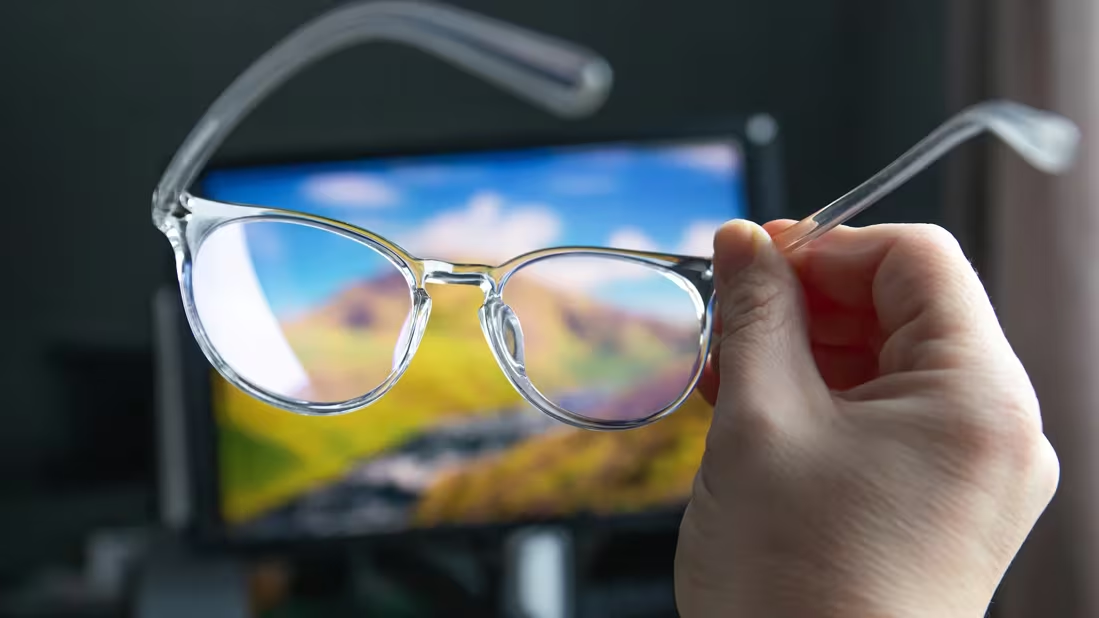
Somewhere between the home office setup and the third Zoom call of the day, a lot of us started wondering if our eyes were quietly begging for mercy. Blue light glasses showed up as the obvious fix, marketed everywhere as the answer to tired, strained eyes after a full day of screens. Before adding another pair to cart, though, it’s worth knowing what these glasses actually do, and what they don’t.
It’s a fair question to ask, especially given how much of daily life now runs through a screen. Work, social media, streaming, even grocery lists, all competing for the same pair of eyes that used to spend a lot more time looking at things farther away. The demand for a simple fix is completely understandable. Whether blue light glasses are actually that fix is a separate question entirely.
What Blue Light Glasses Are Actually Supposed to Do
The basic pitch is simple: screens emit blue light, blue light is framed as the culprit behind tired, strained eyes, and a special lens coating filters some of it out before it reaches your eyes. EyeBuyDirect’s blue light glasses apply this same filtering technology to both prescription and non-prescription lenses, which is why they’ve become such a popular add-on for anyone spending serious hours in front of a laptop.
The appeal makes sense on the surface. It’s a one-time purchase rather than an ongoing habit change, it requires no willpower, and it feels proactive in a way that “just take more breaks” never quite does. That’s a big part of why the category has grown so quickly, it offers a tangible product to buy for a problem that otherwise feels vague and hard to pin down.
What the Research Actually Shows
Here’s where it gets more nuanced than the marketing suggests. A detailed academic review examining blue-light-filtering lenses found that the evidence for symptom relief remains genuinely inconclusive, with some screen-intensive environments showing modest reported benefit while broader clinical evidence stays mixed. A 2023 Cochrane review pooling 17 randomized trials found no consistent improvement in eye strain symptoms compared to ordinary clear lenses, and major eye health organizations, including the American Academy of Ophthalmology, don’t recommend blue light glasses specifically as a treatment for digital eye strain. The strain most people feel after a long day on screens tends to come from something much simpler: reduced blinking, sustained close-up focus, and an outdated prescription, not the blue light spectrum itself.
It’s worth sitting with that distinction for a second, because it reframes the whole product category. Digital eye strain is real. The discomfort people feel is not imagined. What the research questions isn’t whether your eyes get tired, it’s whether a blue light filter is actually the thing fixing it, versus just being the thing people happened to be wearing while other habits quietly improved.
So Why Do So Many People Swear By Them?
This is where things get genuinely interesting. A survey of practicing optometrists found that when patients report feeling better with blue light glasses, the explanation is rarely clean-cut, with nearly a third of surveyed optometrists attributing reported improvement to placebo or expectation effects, and most of the rest pointing to a combination of factors rather than blue light filtration specifically. Only a small fraction considered the glasses clinically valuable for most patients, with the broader consensus describing the benefit as selective, perception-driven, or simply overmarketed relative to the actual evidence.
There’s also a reasonable placebo-adjacent effect worth acknowledging honestly. Believing you’re doing something protective for your eyes can genuinely change how you experience minor discomfort, pay more attention to posture, or simply notice strain less. That’s not nothing, even if it isn’t quite the mechanism the marketing describes.
The Honest Case for Buying a Pair Anyway
None of this means blue light glasses are a waste of money, it just means the reason to buy them probably isn’t “they’ll cure your eye strain.” A slight amber or yellow tint can make screens feel visually softer in the evening, which some people find genuinely more comfortable, even if the mechanism isn’t fully proven. They’re also just an ordinary pair of glasses otherwise, meaning there’s no real downside to wearing them if they feel better to you, the risk here is low even where the clinical proof is thin.
Where the Real Fix Usually Lives
If genuine relief from screen fatigue is the actual goal, the research keeps pointing in a more boring direction: proper screen distance and height, regular breaks using the 20-20-20 rule, deliberate blinking, and, often overlooked entirely, an eye exam to rule out whether the real issue is actually your prescription. A lot of people chase a gadget fix for a problem that’s really a correction or ergonomics problem in disguise, and no lens coating fixes an out-of-date prescription.
An outdated prescription is one of the most common hidden culprits here. Eyes that are working slightly harder than they should be to focus will tire out over a long day regardless of what’s filtering the light coming through the lens. Anyone who hasn’t had an eye exam in the past year or two is often better served starting there before adding any new lens technology on top.
Setting Up Your Space to Actually Help
The environment around your screen matters just as much as anything on your face. If you’re working from a dedicated home setup, thinking through how a workspace is actually laid out affects screen glare, lighting, and how often you’re forced into an awkward angle just to see your monitor properly. A poorly positioned desk near a window with harsh glare will undo whatever benefit a pair of glasses might offer, while a thoughtfully set up space reduces strain regardless of what’s on your face.
Small adjustments tend to matter more than people expect here. Monitor height roughly at eye level, reduced glare from overhead lighting, and a screen distance of about an arm’s length away all address the mechanical causes of strain directly, rather than filtering a wavelength that may not have been the actual problem.
What to Actually Look for If You Buy a Pair
If you decide the comfort factor is worth it regardless of the clinical debate, a few practical details matter more than the blue light claim itself. Anti-reflective coating genuinely does reduce glare from screens and overhead lighting, which is a separate, better-supported benefit from the blue light filtering specifically. Prescription accuracy matters enormously too, pairing blue light protection with an outdated prescription means you’re still straining your eyes regardless of the tint. And comfort over a full workday, weight, fit, how the frame feels after six hours, matters as much as any lens technology layered on top.
A Reasonable Way to Think About the Purchase
Treat blue light glasses the way you’d treat any comfort product with mixed evidence behind it, a weighted blanket, a specific pillow shape, a particular skincare ingredient. If it feels better to you personally, that’s a legitimate reason to keep using it, even without a definitive clinical trial backing the exact mechanism. Just don’t expect it to replace the basics: good screen habits, proper ergonomics, and a prescription that’s actually current.
The Bottom Line
Blue light glasses aren’t a scam, but they’re also not the proven fix the marketing often implies. The honest picture is that mainstream research hasn’t found them to meaningfully reduce digital eye strain on their own, while plenty of individual wearers still report feeling more comfortable, often because better screen habits came along for the ride. If a pair feels genuinely better to wear during a long workday, that’s reason enough to keep them in rotation. Just pair them with the fixes that actually have evidence behind them: breaks, blinking, good ergonomics, and an eye exam that’s actually up to date.