Physical Address
304 North Cardinal St.
Dorchester Center, MA 02124
Physical Address
304 North Cardinal St.
Dorchester Center, MA 02124

Balancing quiet intellectual work, book collecting, and deep, restful sleep within a single room is one of the most rewarding challenges in modern interior design. As remote work and personal study habits become central to daily routines, many homeowners are turning their bedrooms into multi-purpose retreats. However, combining bookshelves, a work desk, and a large mattress can easily lead to a chaotic, crowded room if approached without a clear plan. By implementing vertical storage systems, intentional spatial zoning, and dual-purpose furniture, you can craft a sophisticated library office without sacrificing restful sleep.
A successful multi-purpose room relies on smart spatial boundaries. Separating productive daytime tasks from nighttime relaxation keeps work stress from disturbing your sleep.
When work, reading, and sleep areas bleed together, mental focus and sleep hygiene both suffer. Create distinct operational zones within the room. Place the study desk and primary library shelving along the perimeter nearest to natural window light to maximize daytime energy. Keep the sleeping zone tucked into the quieter, darker corner of the room, using area rugs to physically anchor and separate each zone.
Instead of building permanent walls that block natural light and make spaces feel confined, use tall, open-backed shelving units as room dividers. An open geometric bookshelf positioned perpendicular to a wall separates the work area from the bed while allowing sunlight to filter through both spaces. Filling the lower shelves with heavy hardcovers and upper tiers with trailing plants and ceramics creates a beautiful, living privacy screen.
Book collections add warmth, color, and character to a home, but standard freestanding bookcases often look cluttered and consume valuable floor space.
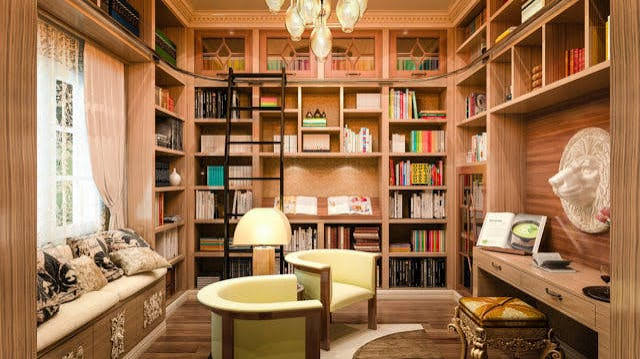
Maximize empty vertical space by installing floor-to-ceiling perimeter shelving along an entire accent wall. Running shelves around doorframes and above window casings creates the rich, scholarly look of a historic private library. Use continuous vertical uprights and matching crown molding to make shelving look like an integrated architectural feature rather than tacked-on furniture.
In a room where you also sleep, an untidy wall of books can feel overstimulating. Balance dense rows of books with breathing room. Group books by binding tone or size, mixing vertical rows with horizontal stacks that double as bookends. Leave twenty percent of shelf space open for small ceramic pieces, framed sketches, or small sculptures to keep the wall looking curated rather than crowded.
A dedicated workstation must support posture and productivity throughout the workday without resembling a sterile corporate cubicle.
Freestanding executive desks consume substantial floor area and trap electrical cables underneath. Integrating a floating timber desk directly into your wall shelving creates a clean, streamlined workstation. Running a continuous thick wood slab across a shelf opening provides plenty of surface area for a monitor, laptop, and writing pad while preserving open floor space below.
Leaving glowing screens, loose papers, and office supplies in view from your pillows keeps your mind focused on deadlines when you should be winding down. Select furniture with drop-down tambour doors, roll-top cabinets, or shallow drawers where laptops and notes can be put away at the end of the day. Closing the desk marks a clear boundary between the workday and your evening rest.
When a room must house an expansive book collection alongside a desk, traditional king or queen beds leave little floor area for circulation.
Furniture that blends storage directly into the sleeping frame saves valuable square footage. Selecting a custom bookshelf bed incorporates recessed display shelves and book cubbies directly into the headboard and surround panels. This keeps your favorite bedtime reading materials within arm’s reach while eliminating the need for standalone nightstands and auxiliary book carts.
Skip black vinyl corporate swivel chairs that look out of place in a home bedroom. Choose an ergonomic task chair upholstered in textured bouclé, soft woven wool, or supple cognac leather. Look for models with low back profiles, clean timber bases, and hidden pneumatic adjustments that provide long-term back support while complementing the cozy atmosphere of a private library.
A room that shifts from a library office to a sleeping sanctuary requires versatile, layered lighting.
Install dedicated, articulating brass or matte black desk lamps that cast targeted pools of illumination onto reading pages and keyboards. For reading in bed, mount directed reading lights equipped with narrow-beam lenses onto the bookshelf structure, allowing you to read late without disturbing a sleeping partner.
Avoid cool, blue-spectrum light fixtures that interfere with your natural circadian rhythm. Choose warm 2700K LED bulbs for all ceiling fixtures, shelf uplights, and floor lamps. Installing smart dimmer switches lets you transition the room from a brightly lit daytime library into a soft, restful retreat as night approaches.