Physical Address
304 North Cardinal St.
Dorchester Center, MA 02124
Physical Address
304 North Cardinal St.
Dorchester Center, MA 02124

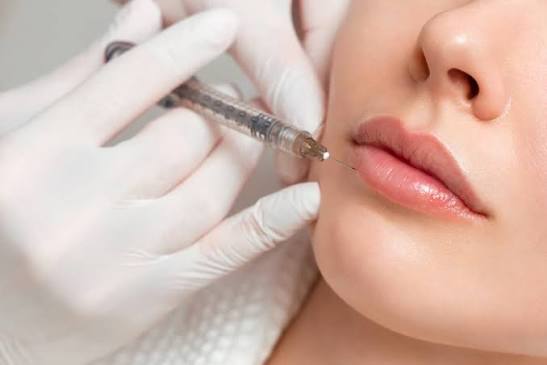
Thirty arrives with subtle structural changes. Mirror reflections reveal mid-face softness shifting downward, mid-cheek contours losing a fraction of their sharpness, and a gradual slowdown in native structural proteins. Skin in your thirties experiences a natural drop in native collagen production: an ongoing biological process that quietly alters internal support.
For years, the immediate answer to these early signs of facial aging was simple hyaluronic acid. People wanted instantaneous structural replenishment, using gel injectables to fill every emerging line or hollow spot. Yet a noticeable shift has occurred in clinical settings over the last few years. Younger patients are actively turning away from immediate gel-filling techniques. They are choosing biostimulatory fillers instead, favoring an approach focused on biological regeneration over immediate space-occupying bulk.
Hyaluronic acid fillers work by attracting water and holding physical space under the tissue. In a face that has experienced severe volume loss, this instant volume serves a clear purpose. Applying that same logic to someone in their early thirties with minimal volume loss creates unexpected problems fairly quickly.
Overfilling young tissue can lead to a heavy, artificial appearance that distorts natural expressions. Hyaluronic acid is hydrophilic; it draws fluid into the area, which sometimes causes localized puffiness around the eyes and upper cheek regions. A 2021 clinical review on soft tissue fillers highlighted how repeated gel injections into youthful tissue can alter localized tissue dynamics over time, leading to subtle fluid retention and over-expansion of the extracellular matrix. Younger individuals are noticing this phenomenon across social media and aesthetic trends, where over-filled facial features are increasingly viewed as a cautionary outcome rather than a beauty standard.
The primary draw of biostimulatory fillers lies in their fundamental mechanism of action. Rather than sitting under the skin as a simple space-filling gel, these injectables act as an active scaffold that prompts the host tissue to rebuild its own structural network.
When a biostimulatory injectable is placed into the deep dermal or sub-dermal layers, the body responds to the temporary scaffold. Fibroblasts are recruited to the area, migrating toward the physical particles of the material. These fibroblasts start depositing fresh, native Type I and Type III collagen fibers. Instead of leaving a clinic with foreign gel holding up the skin, the patient starts a weeks-long process of real tissue regeneration. The result is structural firming driven by the body’s own biological machinery.
A major development within this clinical category is the creation of dual-action fillers (immediate + gradual). These products solve the main complaint historical biostimulators had: the complete lack of initial visual improvement while waiting months for neocollagenesis to take effect.
Among these advanced options, an Ellanse polycaprolactone (PCL) filler represents a distinct approach to tissue restoration. Ellanse consists of smooth, bioresorbable polycaprolactone microspheres suspended in a carboxymethylcellulose (CMC) gel carrier. When injected, the CMC gel provides an immediate, temporary correction of fine lines and early volume loss in your 30s. Over the following weeks, the CMC gel carrier gradually resorbs, while the polycaprolactone (PCL) filler microspheres stimulate continuous collagen stimulation over time. Certified clinical practitioners who purchase Ellanse online to source authentic supplies use Ellanse because its predictable microsphere structure breaks down slowly through hydrolysis. Because Ellanse utilizes precise microsphere sizing, the resulting tissue structure remains remarkably smooth, offering an effective option for individuals seeking sustained structural support without frequent office visits.
This dual-action mechanism ensures that the immediate visual support transitions smoothly into real biological tissue. The initial carrier holds space just long enough for the fibroblast network to establish itself. As the carrier disappears, newly formed collagen matrix replaces it millimeter for millimeter.
One issue that drives 30-somethings toward microsphere-based fillers is the way natural faces move. Standard gel fillers can occasionally migrate or feel heavy when the facial muscles contract during laughter, speech, or normal expression.
Biostimulatory materials blend directly into the native architecture of the face. As the injected carrier dissipates, what remains is your own collagen woven directly into the dermal matrix. The skin moves naturally; there is no gel block sliding over cheekbones or shifting during dynamic muscle movement.
This structural integration delivers subtle, natural-looking results that do not betray the fact that a cosmetic procedure took place. Friends might comment that someone looks well-rested, but they rarely ask where the filler went. This aligns neatly with the broader shift toward subtle intervention, mirroring the preventative “baby botox and filler” trend where the goal is preservation rather than overt transformation.
Furthermore, these interventions lead to longer-lasting results compared to standard hyaluronic acid preparations. While traditional gels might break down in six to twelve months depending on individual metabolic rates, collagen structures built via biostimulation can remain stable for two years or longer, requiring far less frequent touch-ups over time.
Aging in your thirties is rarely about sagging skin; it is about subtle changes in surface texture, fine lines, and slight reductions in dermal density.
When collagen loss begins, the dermal matrix thins out slightly, leading to micro-shadowing and minor surface irregularities. Placing heavy structural gels into these early areas can look obvious and unnatural. Biostimulatory fillers address the root cause by re-thickening the dermis itself. Clinical data indicates that increasing dermal thickness by even half a millimeter alters how light reflects off the skin surface, restoring a firm radiance without changing underlying facial geometry.
Perhaps the largest psychological driver for this demographic is a commitment to preventative aesthetic treatments. The current generation of patients in their thirties views aesthetic care through the same lens as preventive healthcare or structured fitness routines; they want to maintain optimal function rather than fix structural damage after it occurs.
Waiting until significant deep folds form requires heavy structural volume and complex corrective treatments. Rebuilding the collagen matrix early acts like a biological savings account. By stimulating fibroblast activity while the body’s regenerative systems are still robust, patients preserve their structural foundation and delay significant tissue descent. It represents a proactive strategy for aging gracefully, grounding aesthetic choices in long-term tissue health rather than temporary cosmetic fixes.
Ultimately, the turn toward biostimulatory fillers reflects a deeper understanding of facial anatomy and cellular health. People in their thirties are increasingly rejecting the temporary, water-heavy volume of previous decades. By choosing options that encourage real collagen stimulation over time, they are investing in the long-term integrity of their skin, proving that the most effective aesthetic approach is the one that works in harmony with the body’s own biology.